
Working capital management helps small businesses maintain enough funds to pay daily expenses, purchase inventory, manage customer credit and meet supplier obligations. Even a business with good sales can face financial pressure when money gets stuck in unpaid invoices or excess stock. Understanding how to manage short-term assets and liabilities can help business owners make better decisions and maintain smoother operations.
What Is Working Capital Management?
Working capital management is the process of managing the money and resources a business needs for its day-to-day operations. It involves monitoring current assets, such as cash, inventory and customer receivables, along with current liabilities, such as supplier payments, short-term loans and outstanding expenses.
A business generally calculates its working capital using this formula:
Working Capital = Current Assets − Current Liabilities
For example, suppose a business has current assets of ₹8,00,000 and current liabilities of ₹5,00,000. Its working capital is ₹3,00,000.
Positive working capital may indicate that the business has resources available to meet short-term obligations. However, the actual financial position also depends on how quickly inventory can be sold and how reliably customers pay their outstanding balances.
Why Is Working Capital Important for Small Businesses?
Business financial advisory begins with understanding how money moves through a business and identifying areas where funds may become blocked. Proper planning can help a business purchase stock on time, pay employees, settle supplier bills and handle unexpected expenses.
Here are four important benefits:
- Better liquidity: Maintain funds for regular operating expenses.
- Improved supplier relationships: Make payments according to agreed terms.
- Efficient inventory management: Avoid tying up too much money in slow-moving stock.
- Stronger business stability: Prepare for seasonal demand, delayed customer payments and unexpected costs.
Working capital management is particularly useful for retailers, wholesalers, service providers, manufacturers and growing small enterprises.
5 Practical Ways to Improve Working Capital
1. Monitor Customer Payments and Receivables
Accounts receivable management is essential when a business sells goods or services on credit. Delayed collections reduce the funds available for future purchases and operating expenses.
Maintain a customer-wise list containing invoice dates, due dates, outstanding amounts and payment status. Review overdue invoices regularly and send polite payment reminders before and after the agreed due date.
You can also establish clear credit terms for new customers, evaluate payment history before extending additional credit and resolve invoice disputes quickly. The aim is to reduce collection delays without damaging valuable customer relationships.
2. Control Inventory and Avoid Excess Stock
Inventory management helps prevent money from remaining locked in products that are not selling. Excess inventory increases storage costs and may lead to damage, expiry or obsolescence.
Review stock movement regularly and identify fast-moving, slow-moving and non-moving items. Use previous sales, seasonal trends and supplier lead times to plan purchases. Reorder products according to actual demand rather than purchasing large quantities simply because a discount is available.
For example, if a retailer has ₹4,00,000 invested in stock but ₹1,00,000 relates to products that rarely sell, improving purchasing decisions may release funds for more productive uses.
3. Plan Supplier Payments Carefully
Supplier payments should be planned around customer collections, stock requirements and agreed credit terms. Paying every supplier immediately may unnecessarily reduce available cash, while paying late can damage business relationships or lead to penalties.
Prepare a payment calendar showing supplier names, invoice amounts, due dates and priority. Where appropriate, discuss mutually acceptable payment terms with suppliers. Take advantage of early-payment discounts only after comparing the savings with the benefit of retaining funds for other obligations.
A well-maintained payment schedule helps business owners avoid missed deadlines and make more informed decisions about short-term commitments.
4. Prepare a Short-Term Financial Plan
Financial planning services can help business owners assess upcoming receipts, payments and funding requirements. A simple weekly or monthly plan can show when money is expected to come in and when payments must be made.
Include expected customer collections, cash sales, supplier payments, salaries, rent, utilities, taxes and loan instalments. Update the plan when orders are delayed, expenses change or customer payments are uncertain.
Do not treat every expected receipt as guaranteed. Create realistic estimates and maintain a reasonable reserve for unexpected expenses. This makes it easier to identify potential shortages before they affect business operations.
5. Review Expenses and Use Business Reports
Regularly reviewing expense categories can reveal opportunities to reduce unnecessary spending. Compare current expenses with previous months and investigate significant changes in transport, packaging, rent, utilities and other operating costs.
Maintain accurate books and reconcile bank transactions so that financial information reflects actual business activity. A monthly review of outstanding receivables, supplier balances, stock and short-term liabilities can help identify where funds are being used.
Financial management consulting may be useful when a business needs help analyzing financial reports, identifying inefficiencies or planning improvements. Any proposed change should be based on the business’s actual figures rather than assumptions.
A Simple Working Capital Example
Consider a small wholesale business with the following monthly position:
| Particulars | Amount |
|---|---|
| Cash and bank balance | ₹1,50,000 |
| Customer receivables | ₹2,50,000 |
| Inventory | ₹3,00,000 |
| Total current assets | ₹7,00,000 |
| Supplier payables | ₹2,00,000 |
| Other short-term liabilities | ₹1,50,000 |
| Total current liabilities | ₹3,50,000 |
| Working capital | ₹3,50,000 |
These illustrative figures show positive working capital of ₹3,50,000. However, the business should still check whether customer invoices will be collected on time and whether its inventory can be sold at the expected value.

If collections are delayed or stock remains unsold, the business may experience pressure despite showing positive working capital on paper. This is why reviewing the quality and timing of current assets is just as important as calculating the total.
Small businesses can experience financial difficulties when they overlook basic controls. Avoid these common mistakes:
- Allowing customer invoices to remain overdue without follow-up.
- Purchasing inventory without reviewing demand and stock movement.
- Mixing personal and business transactions.
- Ignoring supplier due dates and short-term loan commitments.
- Assuming that accounting profit always means cash is available.
- Failing to update financial records and payment forecasts.
Reviewing these areas regularly can help businesses recognize problems earlier and take corrective action.
When Should a Business Review Its Working Capital?
A business should review its working capital at regular intervals, preferably monthly, and more frequently when cash availability is tight or sales fluctuate significantly. Seasonal businesses may benefit from reviewing their position before peak purchasing periods and after major sales cycles.
Pay particular attention when sales are growing rapidly, customer credit is increasing, suppliers are changing payment terms or inventory is accumulating. Growth can increase funding requirements because a business may need to purchase stock and pay operating expenses before receiving money from customers.
Where delayed payments are affecting operations, business owners can consult the official MSME payment guidance to understand relevant payment protections and available mechanisms.
How Professional Financial Support Can Help
A business owner may be able to manage routine monitoring internally, but more complex situations can require a structured review of financial records, outstanding balances, purchasing patterns and funding needs.
A financial consultant for small business can help assess financial information, identify areas requiring attention and develop practical management processes. Support may include preparing management reports, reviewing working capital trends, setting budgets and evaluating short-term funding requirements.
Choose support based on the business’s actual needs, and confirm the provider’s relevant qualifications and scope of services. Financial decisions should be based on accurate records and realistic assumptions.
For businesses seeking help with financial review and planning, explore our financial advisory services.
Conclusion
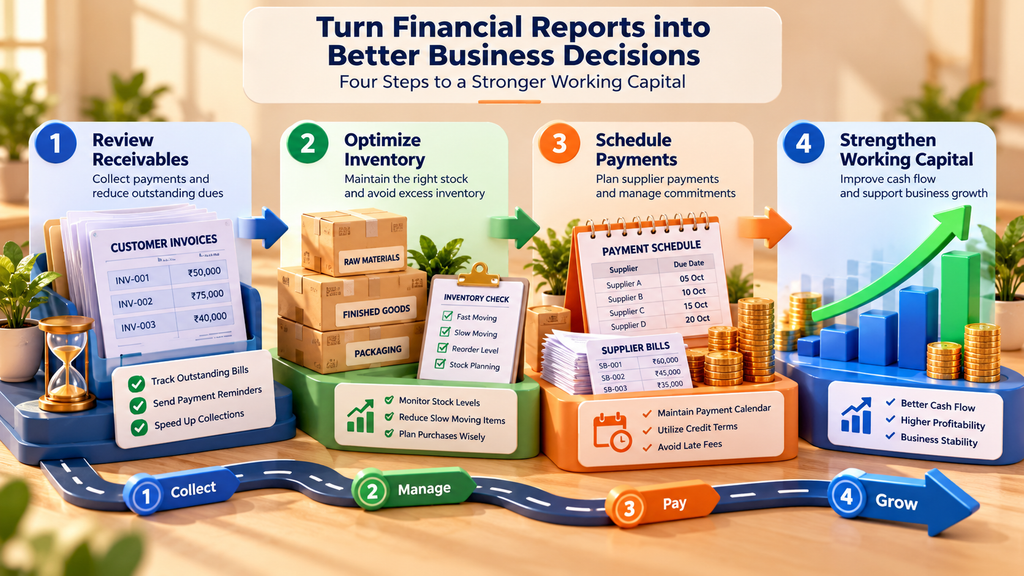
Working capital management is an important part of running a stable and sustainable small business. Monitoring customer collections, controlling inventory, scheduling supplier payments and reviewing financial reports can help businesses use their available funds more effectively.
Start with accurate records, a simple payment calendar and a regular review of current assets and liabilities. As the business grows, update these practices to reflect changing sales, customer credit and operating requirements. Consistent monitoring can help business owners make better-informed decisions and prepare for future financial needs.
Frequently Asked Questions
1. What is working capital management in simple terms?
It is the process of managing short-term business money, inventory, customer receivables and supplier payments so daily operations can continue smoothly.
2. How is working capital calculated?
Subtract total current liabilities from total current assets. The result indicates the difference between short-term resources and short-term obligations.
3. Can a profitable business have working capital problems?
Yes. A business may record profit but still face payment difficulties when customers pay late, too much money is tied up in inventory or major bills become due before receipts arrive.
4. How often should working capital be reviewed?
A monthly review is a useful starting point. Businesses experiencing seasonal changes, rapid growth or collection delays may need more frequent monitoring.
5. What is the first step to improve working capital?
Start by reviewing cash and bank balances, overdue customer invoices, inventory, supplier payables and upcoming expenses. Use this information to identify the most urgent gaps and prepare a realistic action plan.