A profit and loss statement helps business owners understand how much income their business earns and how much it spends during a specific period. Whether you run a retail shop, trading business, service company, or startup, this report provides useful information about financial performance. By reviewing sales, costs, and operating expenses, you can identify what is working well and where improvements may be needed.
What Is a Profit and Loss Statement?
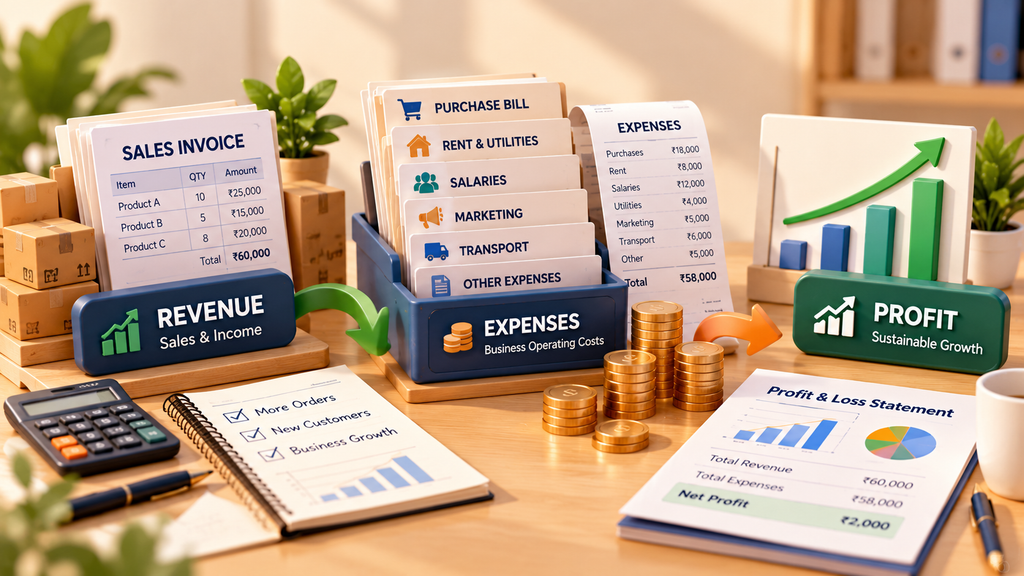
An income statement is another commonly used name for a profit and loss report. It summarizes income and expenses over a particular period, such as a month, quarter, or financial year. The final result indicates whether the business generated a profit or incurred a loss during that period.
Financial statements serve different purposes. An income statement explains financial performance over time, a balance sheet presents assets and liabilities at a specific date, and a cash flow statement tracks cash movements. Reviewing these reports together helps owners understand their business more comprehensively.
Why Is This Financial Report Important for Small Businesses?
Small business accounting becomes more useful when owners regularly review their financial results instead of looking only at sales figures. A business may generate high revenue but still earn a limited profit because of purchasing costs, rent, salaries, transport, interest, and other expenses.
Business financial analysis helps identify cost increases, compare performance between periods, evaluate pricing, and prepare budgets. It can also help business owners explain their financial position when discussing funding, expansion, or business plans with professional advisers.
Some important benefits include:
- Monitoring income and expenses.
- Identifying major operating costs.
- Comparing monthly and yearly results.
- Understanding changes in profitability.
- Supporting pricing and budgeting decisions.
- Improving financial planning and record keeping.
Main Components of a Profit and Loss Report
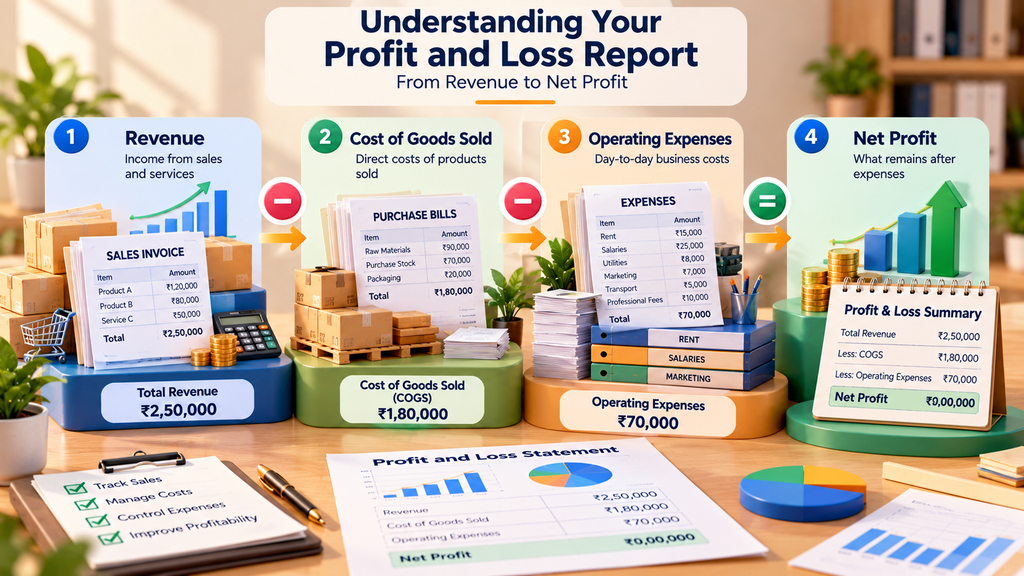
Revenue and expenses are the starting points for understanding a business’s financial performance. Although the exact presentation may vary according to the type of entity and applicable accounting requirements, several important components commonly appear in this report.
1. Revenue or Sales
Business revenue represents income earned from ordinary business activities, such as selling products or providing services. For example, a retailer earns revenue from product sales, while a consultancy earns fees from its clients.
Compare sales figures across different periods to identify growth or decline. Also consider sales returns, discounts, and other applicable adjustments when interpreting the reported amount.
2. Cost of Goods Sold
Cost of goods sold (COGS) generally represents the cost associated with the goods sold during a period. For a trading business, the calculation may involve opening inventory, purchases, relevant direct costs, and closing inventory, with appropriate adjustments for returns and other applicable items.
For example, if a shop records net sales of ₹5,00,000 and the cost of goods sold is ₹3,20,000, the difference before other relevant income and expenses is ₹1,80,000. Accurate inventory and purchase records are essential for calculating this figure correctly.
3. Gross Profit
Gross profit is the amount remaining after deducting the cost of goods sold from net sales, where this calculation applies to the business.
Formula: Gross Profit = Net Sales − Cost of Goods Sold
If net sales are ₹5,00,000 and the cost of goods sold is ₹3,20,000, gross profit is ₹1,80,000. This figure helps owners review product pricing, purchasing costs, and the profitability of their sales activities.
4. Operating Expenses
Operating expenses are costs incurred to run everyday business operations. Depending on the business, these may include rent, salaries, electricity, internet, advertising, transport, repairs, and professional fees.
Review each category to understand where money is being spent. An unusual increase in an expense may require further investigation, but costs should not be reduced without considering their necessity and contribution to business operations.
5. Net Profit or Net Loss
Net profit represents the result after relevant income and expenses have been accounted for under the applicable reporting basis. When expenses exceed income, the business may report a net loss.
Consider an illustrative business with revenue of ₹5,00,000, cost of goods sold of ₹3,20,000, and other expenses of ₹1,20,000. The resulting amount is ₹60,000 before any additional items not included in this simplified example. The final reported result may differ after considering other applicable income, interest, depreciation, and tax expenses.
What Is the Difference Between Revenue and Profit?
Revenue versus profit is an important distinction for every business owner. Revenue represents the income generated from business activities, while profit is the amount remaining after the relevant costs and expenses are deducted.
For example, a business with substantial sales may still earn a small profit if product costs, salaries, rent, and other expenses are high. Reviewing both figures helps owners understand whether increased sales are actually improving business performance.
How to Calculate the Net Profit Margin
Net profit margin measures net profit as a percentage of revenue. It can help business owners compare profitability between periods when the figures are prepared consistently.
Formula: Net Profit Margin = (Net Profit ÷ Revenue) × 100
For example, if revenue is ₹5,00,000 and net profit is ₹50,000, the net profit margin is 10%. This means the business earned ₹10 in net profit for every ₹100 of revenue based on these illustrative figures.
Profitability analysis becomes more useful when this percentage is compared with previous periods, internal targets, and relevant industry conditions. A single percentage alone does not explain every factor affecting business performance.
How to Use Financial Reports to Improve Business Performance
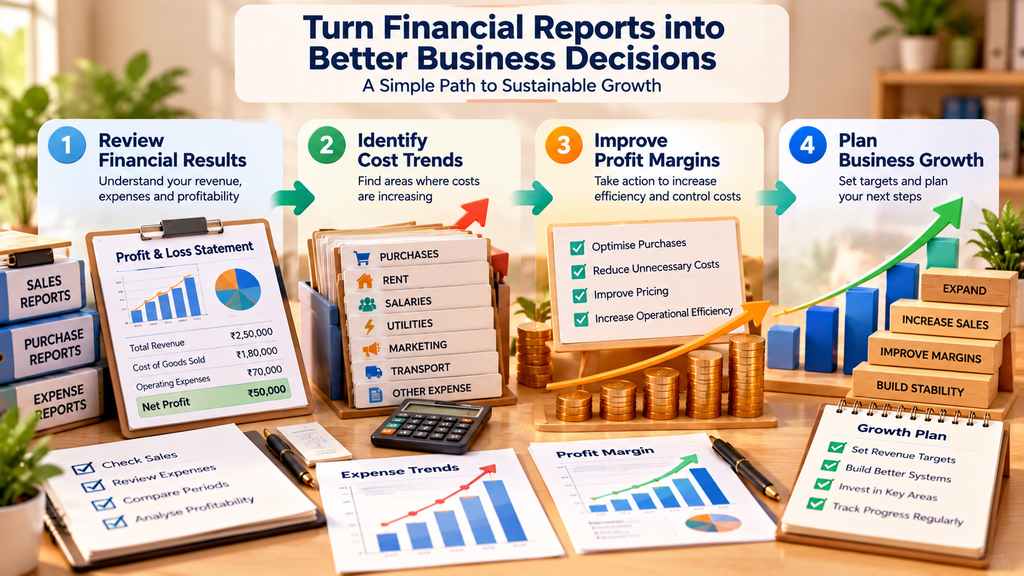
Financial performance analysis helps turn accounting information into practical decisions. Instead of reviewing a report only at the end of the year, owners can use regular comparisons to identify changes and take suitable action.
Useful steps include:
- Compare monthly results: Review revenue, gross profit, and expenses to identify significant changes.
- Review cost trends: Investigate increases in purchasing costs, salaries, rent, transport, or advertising.
- Evaluate pricing: Check whether selling prices adequately cover costs and contribute to profitability.
- Monitor business activities: Where reliable records are available, compare the performance of different products or services.
- Prepare realistic budgets: Use historical results to set achievable income and expense targets.
- Check record accuracy: Review transactions, purchase adjustments, returns, and expense classifications.
Common Mistakes to Avoid
Accurate accounting records are essential for understanding the financial results correctly. Even a well-designed report can be misleading if the underlying entries are incomplete or incorrectly classified.
Common mistakes include:
- Reviewing sales without considering expenses.
- Comparing periods that cover different lengths of time.
- Overlooking returns, discounts, or purchase adjustments.
- Recording transactions in the wrong accounting period.
- Ignoring unusual changes in costs.
- Assuming net profit is the same as the cash available in the bank.
Financial reporting accuracy improves when business owners reconcile records regularly and investigate unusual differences. Where the appropriate accounting treatment is uncertain, seek guidance from a qualified accounting professional.
How Often Should a Business Review Its Financial Results?
Monthly financial reporting helps business owners identify changes before they become larger concerns. Many businesses benefit from reviewing results each month and comparing quarterly or annual performance when appropriate.
Business performance tracking is most effective when reports are prepared consistently and supported by complete records. Seasonal sales, unusual transactions, and changes in accounting methods should also be considered when comparing results.
When Should You Seek Professional Accounting Advice?
Accounting services for small business can help maintain organized records, review financial reports, identify discrepancies, and understand changes in profitability. Professional assistance may be especially useful when profits decline unexpectedly, expenses increase sharply, or reports do not match supporting records.
If you need help understanding your business’s financial performance, explore our financial advisory services to learn more about the support offered through Digital Sarvani.
For further technical information, refer to the ICAI guidance on financial statements published by the Institute of Chartered Accountants of India.
Frequently Asked Questions
What is a profit and loss statement?
A profit and loss statement summarizes a business’s income and expenses over a specified period and shows the resulting profit or loss.
Is an income statement the same as a P&L report?
An income statement is another common name for a profit and loss report. The format and terminology may vary depending on the entity and applicable reporting requirements.
Can a business have high sales but low profit?
Business profitability depends on both income and costs. High sales may still result in low profit when purchasing costs and operating expenses are substantial.
Does net profit mean money is available in the bank?
Net profit and cash flow measure different aspects of a business. A business may report profit while customers still owe money, or cash may have been used for inventory, loan repayments, or asset purchases.
How can a small business improve profitability?
Profit improvement begins with reviewing income, product costs, operating expenses, and trends over time. Owners can then assess pricing, improve cost control, and strengthen financial record keeping.
Conclusion
Financial performance reporting helps small business owners understand their income, costs, and profitability more clearly. By reviewing revenue, cost of goods sold, operating expenses, and net profit, owners can identify trends and make more informed decisions.
Regular reviews, accurate accounting records, and timely professional guidance can support better planning and stronger financial management. Use your financial reports as practical decision-making tools rather than treating them as documents prepared only for year-end reporting.