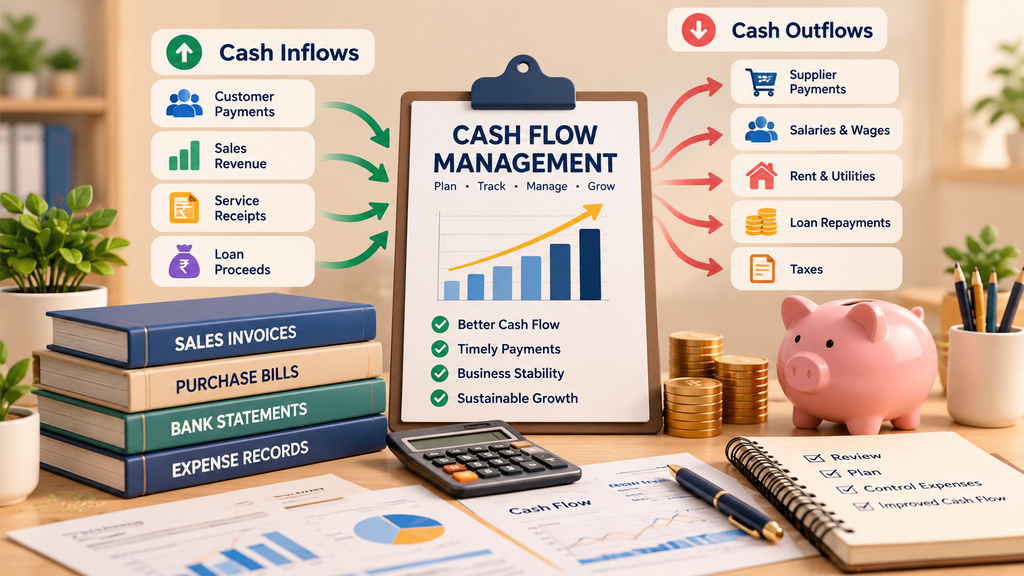
Cash flow management helps small businesses understand how money enters and leaves their business, plan upcoming payments, and avoid unexpected cash shortages. Even when sales are growing, a business can face financial pressure if customers pay late while salaries, rent, supplier bills, and taxes are due.
What Is Cash Flow Management?
Business cash flow refers to the movement of money into and out of a business during a specific period. Money received from customers, business loans, or other sources creates cash inflows, while supplier payments, salaries, rent, utilities, and loan repayments create cash outflows.
Cash flow management is the process of tracking these movements and planning how available funds will be used. It helps business owners understand whether they can meet immediate obligations and prepare for future expenses.
For example, a business may issue invoices worth ₹3,00,000 during a month but collect only ₹1,80,000 before the month ends. If its payments during that period are ₹2,20,000, it may experience a cash shortage even though its sales appear healthy.

Why Is Cash Flow Important for a Small Business?
Small business financial management depends on having enough accessible money to keep daily operations running. Revenue and profit are important, but they do not automatically mean that sufficient cash is available in the bank.
The following situations show why monitoring cash movements matters:
- Timely supplier payments: Available funds help businesses pay suppliers according to agreed terms and maintain reliable working relationships.
- Salary and operating expenses: Cash planning helps owners prepare for payroll, rent, electricity, transport, and other recurring costs.
- Tax payment preparation: Setting aside money for applicable GST, TDS, advance tax, and other statutory obligations reduces the risk of spending funds needed later.
- Business growth: A clear view of available cash helps owners assess whether they can afford additional stock, equipment, staff, or marketing.
- Emergency readiness: Maintaining a suitable reserve can help the business handle delayed collections, seasonal slowdowns, or unexpected repairs.
What Is the Difference Between Cash Flow and Profit?
Cash flow and profit measure different aspects of financial performance. Profit generally reflects income earned minus expenses incurred during an accounting period, while cash flow tracks money actually received and paid.
Consider a business that sells goods worth ₹1,00,000 on credit. The sale may be recognised as revenue under the applicable accounting method, but the money will not be available in the bank until the customer pays.
At the same time, the business may need to pay its supplier immediately. This timing difference can create a cash shortage even if the transaction contributes to accounting profit.
Therefore, business owners should review their profit and loss statement alongside bank balances, outstanding customer payments, supplier dues, and expected receipts. Neither report should be used alone to make every financial decision.
How to Prepare a Simple Cash Flow Forecast
Cash flow forecasting estimates the money a business expects to receive and pay over a future period. A forecast can be prepared in a spreadsheet and updated whenever payment dates, expected collections, or expenses change.
Step 1: Record the Opening Cash Balance
Opening cash balance means the money available at the beginning of the selected period. Include the relevant bank and cash balances, ensuring that transfers between accounts are not counted twice.
Step 2: Estimate Expected Cash Inflows
Cash inflows may include customer collections, cash sales, service receipts, loan disbursements, or other genuine incoming funds. Use realistic collection dates rather than assuming that every customer will pay immediately.
Step 3: List Expected Cash Outflows
Cash outflows include supplier payments, wages, rent, utilities, loan instalments, taxes, and other planned expenses. Record the expected payment date and amount for each item.
Step 4: Calculate the Closing Balance
Closing cash balance can be estimated using this simple formula:
Closing Balance = Opening Balance + Expected Inflows − Expected Outflows
For example, suppose a business starts the month with ₹50,000, expects receipts of ₹1,50,000, and anticipates payments of ₹1,65,000. Its estimated closing balance will be ₹35,000.
This example is only an illustration. Actual forecasts should use the business’s own balances, confirmed receipts, payment commitments, and realistic assumptions.
Step 5: Update the Forecast Regularly
Cash flow forecasting becomes more useful when actual receipts and payments are compared with estimates. Reviewing the forecast weekly can help identify a possible shortfall early enough to follow up with customers, reschedule non-essential purchases, or discuss suitable funding options.
Practical Ways to Improve Business Cash Flow
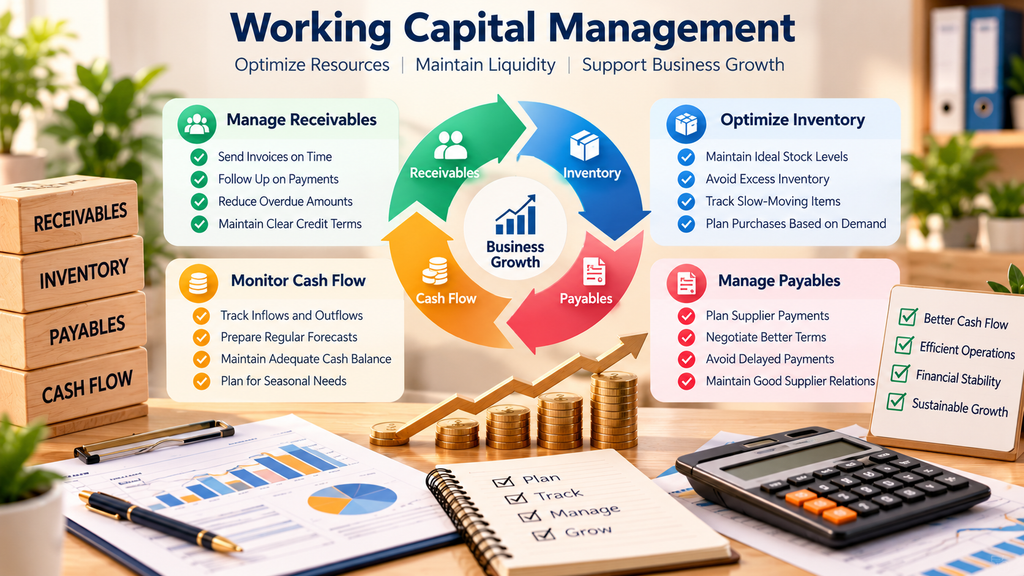
Working capital management focuses on managing short-term resources and obligations so that daily operations can continue smoothly. Businesses can improve their cash position by making a few consistent changes.
1. Send Invoices Promptly
Invoice management helps businesses reduce unnecessary delays between delivering goods or services and requesting payment. Issue accurate invoices promptly, communicate payment terms clearly, and maintain a record of due dates.
2. Follow Up on Outstanding Payments
Accounts receivable management means monitoring amounts customers owe the business. Review overdue invoices regularly and send polite reminders before and after the due date, according to the agreed terms.
3. Review Inventory Levels
Inventory management can prevent too much money from remaining tied up in slow-moving goods. Compare stock movement with customer demand and purchase requirements before placing additional orders.
4. Plan Supplier Payments
Accounts payable management helps business owners organise upcoming obligations. Review due dates, communicate with suppliers when necessary, and agree on reasonable payment terms rather than delaying payments without discussion.
5. Separate Tax Funds from Operating Money
Business expense planning should include amounts expected to be payable towards applicable taxes and statutory dues. Keeping suitable funds aside makes it easier to prepare for deadlines and avoid treating money reserved for obligations as freely available cash.
6. Review Recurring Expenses
Expense control involves checking regular costs such as subscriptions, delivery charges, rent, utilities, and service contracts. Identify unnecessary spending while protecting the activities essential to the quality and continuity of the business.
Which Financial Records Should a Business Monitor?
Financial record maintenance gives business owners the information needed to prepare forecasts and understand financial pressure points. Keeping these records current also supports better discussions with accountants, lenders, and business advisers.
Useful records include:
- Sales invoices and customer receipts.
- Purchase bills and supplier payment details.
- Bank statements and cash records.
- Outstanding receivables and payable balances.
- Loan repayment schedules and other commitments.
- Relevant GST, TDS, and income tax records.
- Monthly profit and loss statements and bank reconciliation reports.
Accounts maintenance should involve regularly comparing accounting records with bank statements and investigating unexplained differences. Accurate records make it easier to distinguish actual cash availability from amounts that are still expected from customers.
Can Accounting Software Help Track Cash Flow?
Business accounting software can help organise invoices, expenses, customer balances, supplier dues, and bank transactions in one system. Depending on the software and its features, it may also generate reports that support cash planning.
However, software is only as reliable as the information entered into it. Business owners should review transaction classifications, reconcile bank accounts, update payment statuses, and verify important figures before making financial decisions.
A spreadsheet can also be useful for a small business with relatively simple transactions. The best option is one that the business can maintain consistently and review regularly.
When Should a Business Seek Financial Advice?
Financial advice for small business can be useful when owners face recurring cash shortages, growing overdue customer balances, increasing borrowing costs, or difficulty planning major purchases. A professional review may help identify collection delays, expense patterns, working capital needs, and weaknesses in financial reporting.
Businesses considering external support can explore financial advisory services to understand the types of assistance available. The appropriate support depends on the business’s circumstances, records, and specific requirements.
For additional guidance, the Government of India’s Women Entrepreneurship Platform provides a cash-flow management checklist as part of its access-to-finance resources.
Frequently Asked Questions
What is the main purpose of cash flow management?
Cash flow management helps a business track available money, plan payments, anticipate shortages, and make informed decisions about operating expenses and future requirements.
How often should a business review its cash flow?
Cash flow monitoring can be done daily for bank balances and important transactions, with a more detailed forecast reviewed weekly or monthly depending on the business’s size and payment activity.
Can a profitable business experience a cash shortage?
Business cash flow can become negative even when a business reports a profit. This may happen when customers have not paid their invoices, stock purchases absorb cash, or major payments fall due before expected receipts arrive.
Is a cash flow forecast the same as a cash flow statement?
A cash flow forecast estimates future receipts and payments, while a cash flow statement reports cash movements over a past period. Both provide useful information, but they serve different purposes.
Conclusion
Effective cash flow management gives small business owners a clearer view of their available funds, upcoming commitments, and possible financial risks. Regular forecasting, timely invoicing, customer follow-ups, expense reviews, and accurate financial records can help businesses make more confident decisions.
The goal is not simply to increase sales, but to ensure that money is available when the business needs it. A consistent review process can help owners prepare for obligations, manage working capital, and plan sustainable growth.