What Is GSTR-3B?
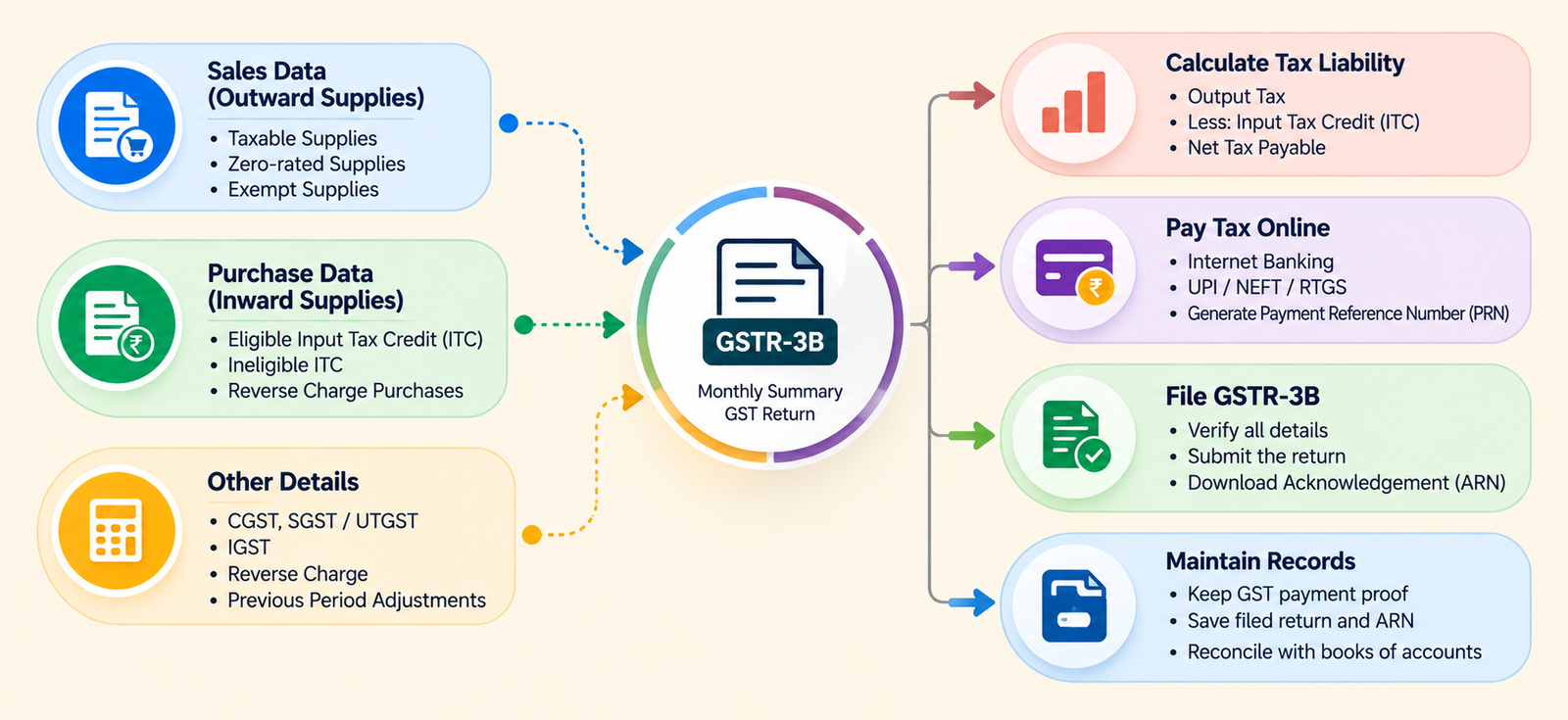
GSTR-3B is a summary GST return used by eligible registered taxpayers to report relevant outward supplies, certain inward supplies liable to reverse charge, eligible input tax credit and the resulting tax liability for the applicable tax period.
Unlike detailed invoice-level reporting, GSTR-3B provides a consolidated view of important GST information for the relevant period. The return includes sections relating to outward supplies, reverse-charge supplies, input tax credit and tax liability.
For businesses, accurate preparation of the return is important because the information reported in GSTR-3B is connected with GST liability and tax payment.
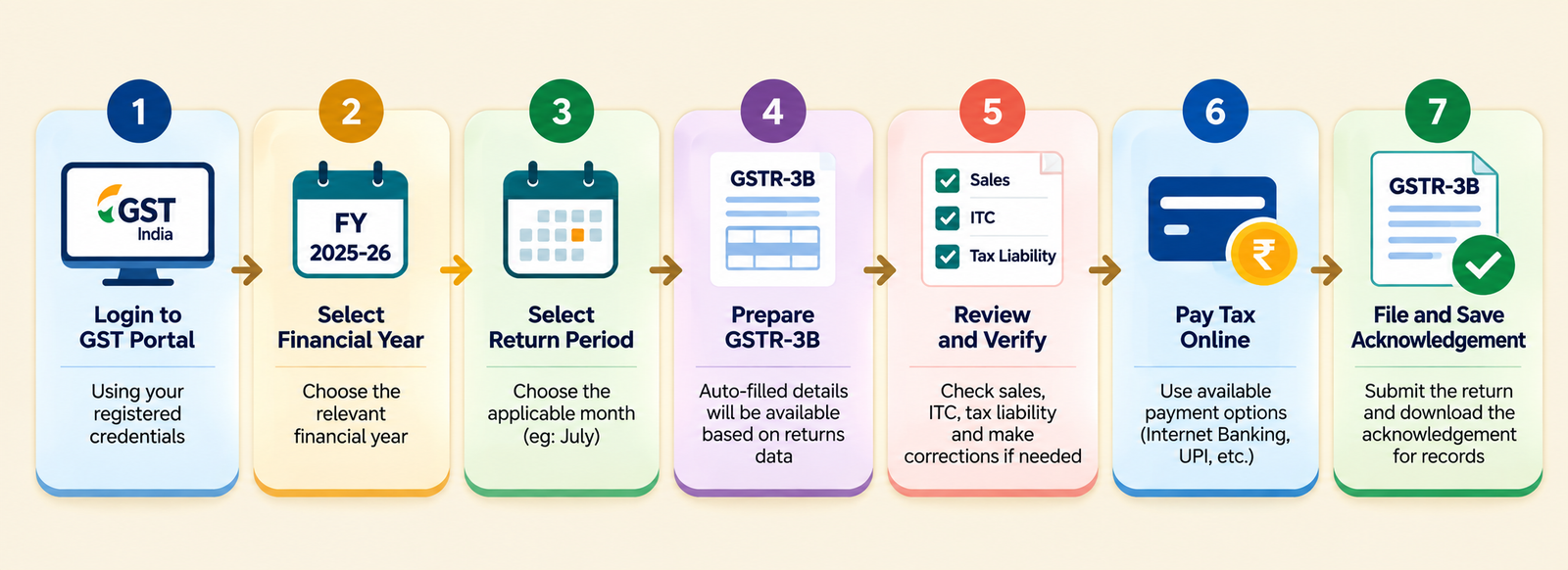
Open the GST return filing portal and log in with your valid GST credentials.
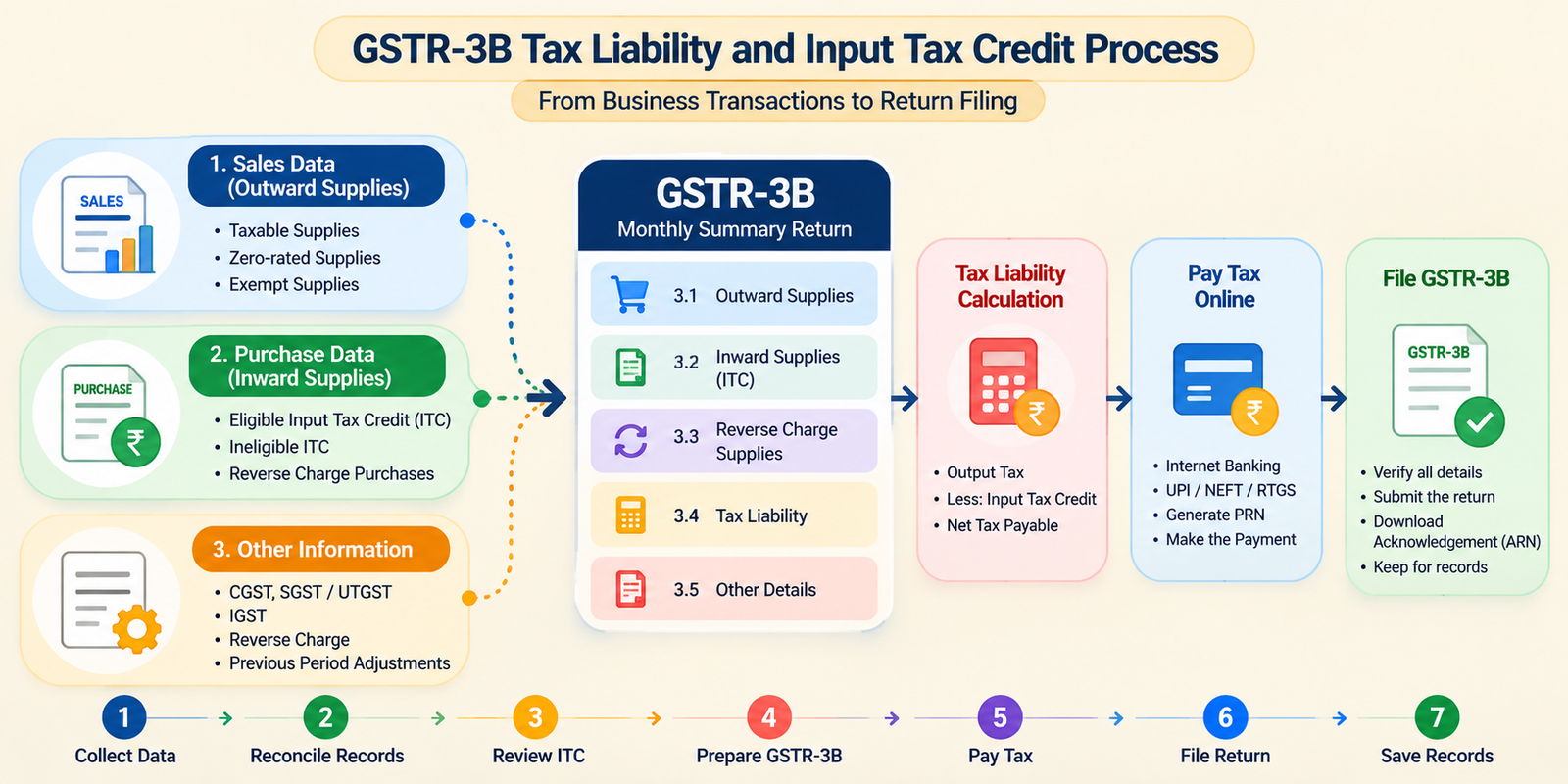
Collect Data → Reconcile Records → Review ITC → Prepare GSTR-3B → Pay Tax → File Return → Save Records
Following a structured process can help businesses reduce errors and maintain better GST compliance.
What Is GSTR-3B Filed For?
GSTR-3B is used to report applicable summary GST information for the relevant tax period and discharge the resulting tax liability.
Before preparing the return, a business should review its GST-related information carefully.
Important areas to check include:
- Sales and outward supplies
- Taxable turnover
- Exempt and nil-rated supplies, where applicable
- Reverse-charge transactions
- Input tax credit
- Available ITC information
- Tax liability
- Tax already paid, where applicable
- Interest or late fee, if applicable
The figures reported in the return should be supported by the business’s books, invoices and other relevant GST records.
This is why proper accounting and reconciliation should be completed before starting the GSTR-3B filing process.
Information Required Before Filing GSTR-3B
Before starting the online filing process, keep the relevant financial and GST information ready.
Sales Information
Prepare the sales information for the applicable tax period.
Review taxable sales, exempt supplies, nil-rated supplies and other applicable outward supplies.
The sales figures in your books should be checked against the GST information being reported.
Purchase and ITC Information
Review purchase records and input tax credit information before entering ITC figures.
Businesses should carefully examine the available ITC information and identify differences that may require reconciliation.
GSTR-1 Information
Review the outward supply information reported or prepared for GSTR-1.
Comparing sales records with GSTR-1 and GSTR-3B can help identify differences before the return is filed.
Tax Liability Information
Calculate the applicable tax liability after considering the relevant outward supplies, reverse-charge liability and eligible input tax credit.
Also check whether any interest or late fee is applicable.
How to File GSTR 3B Online Step by Step
How to file GSTR 3B online is a common question for businesses that need to complete their GST return filing accurately and on time. The process involves reviewing sales, input tax credit, tax liability and filing the return through the GST Portal.
The gstr-3b filing process step by step can be completed through the GST Portal.
Step 1: Login to the GST Portal
Open the official GST Portal and log in using the registered credentials.
After successful login, navigate to:
Services → Returns → Returns Dashboard
The Returns Dashboard is used to access the applicable GST returns for the selected financial year and tax period.
Step 2: Select the Financial Year and Return Period
On the Returns Dashboard, select the applicable:
- Financial Year
- Return Filing Period
After selecting the required period, click Search.
The available return tiles will be displayed.
Locate the GSTR-3B tile and select the applicable option to prepare the return online.
Step 3: Review Outward Supplies
The next step is to review the outward supply information.
Depending on the applicable transactions, review:
- Taxable outward supplies
- Zero-rated supplies
- Nil-rated supplies
- Exempt supplies
- Non-GST supplies
- Supplies liable to reverse charge
The figures should be compared with your books of accounts and relevant sales records.
It is better to identify and correct differences before filing rather than discovering them after submission.
Step 4: Review Input Tax Credit
Input tax credit is an important part of the GSTR-3B preparation process.
Review the available ITC information and compare it with your purchase records and applicable GST data.
The review should include:
- Eligible ITC
- ITC already considered
- ITC reversals
- Ineligible ITC
- Differences requiring reconciliation
A simple internal process can be:
Purchase Records → GST Data → ITC Review → Reconciliation → Final ITC
Proper ITC review can help businesses maintain accurate GST records and improve their overall GST compliance process.
Step 5: Calculate the Tax Liability
After reviewing outward supplies and eligible ITC, determine the applicable tax liability.
Check the figures carefully before proceeding.
Important points include:
- Taxable turnover
- Applicable GST
- Reverse-charge liability
- Eligible ITC
- ITC reversals
- Tax payable
- Interest or late fee, where applicable
The final liability should be reconciled with the books and GST records.
Step 6: Preview the Return
Before filing, carefully review the prepared return.
Check:
- GSTIN
- Taxable values
- Tax amounts
- ITC figures
- Reverse-charge information
- Tax payable
- Other applicable details
Previewing the return gives the taxpayer an opportunity to identify errors before final submission.
If there is any unexpected difference, stop and reconcile the figures before continuing.
Step 7: Pay the Applicable Tax
If tax is payable, ensure that the applicable liability is properly discharged through the GST payment mechanism.
Before proceeding, review the available electronic cash and credit ledger balances.
Make sure the amount required for the applicable liability is properly accounted for.
Step 8: File the Return
After completing the review and payment process, proceed with filing the return.
The GST Portal provides the applicable filing method for the authorized signatory.
Depending on the taxpayer and available facility, filing may involve the applicable verification method such as DSC or EVC.
After successful submission, the return status should reflect that the return has been filed.
Step 9: Download the Filed Return
After successful filing, download and save a copy of the filed GSTR-3B.
Maintain the filed return along with the supporting documents and reconciliation records.
Keeping these records organised can make future GST compliance, reconciliation and verification easier.
What Is the GSTR-3B Filing Due Date?
The gstr-3b filing due date depends on the applicable taxpayer category, filing frequency, tax period and government notifications.
Therefore, businesses should not rely on an old generic date when preparing their current return.
Always verify the applicable filing date for the specific taxpayer and tax period through the GST Portal and relevant official notifications.
Maintaining a monthly compliance calendar can also help businesses avoid missing important GST filing dates.
Difference Between GSTR-1 and GSTR-3B
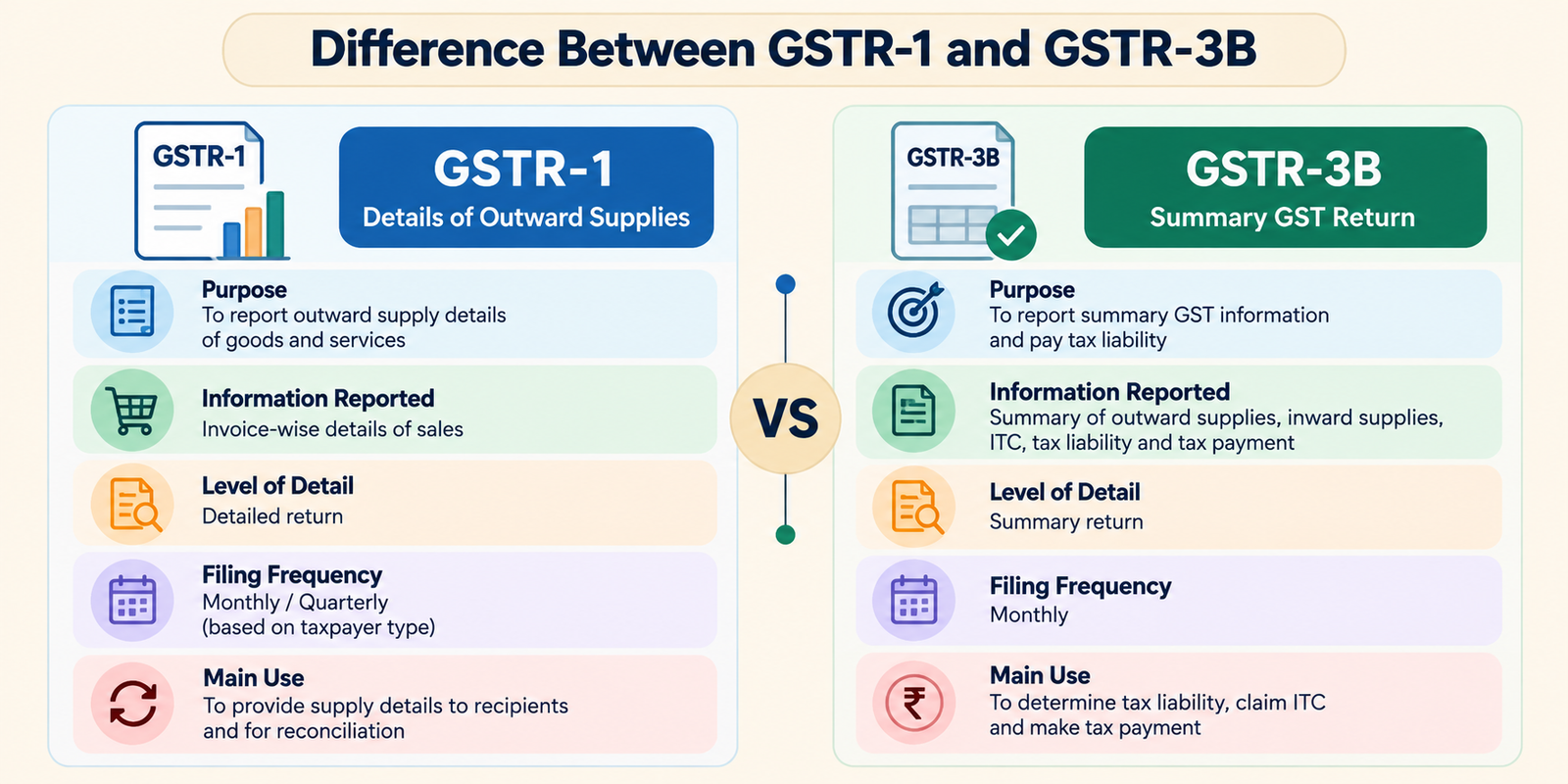
GSTR-1 and GSTR-3B are different GST returns and serve different reporting purposes.
GSTR-1
GSTR-1 primarily deals with outward supply information.
It contains relevant details relating to sales and outward supplies that are required to be reported by the applicable taxpayer.
GSTR-3B
GSTR-3B is a summary return used for reporting applicable GST liability and input tax credit information and for discharging the resulting tax liability.
A business should review both returns together as part of its GST reconciliation process.
A simple workflow can be:
Sales Records → GSTR-1 → Reconciliation → GSTR-3B → Tax Payment → Filing
Checking the information across both returns can help identify differences before the final return is submitted.
Common Mistakes to Avoid During GSTR-3B Filing
Even small errors can create reconciliation problems. Businesses should therefore review the return carefully before filing.
Entering Incorrect Sales Figures
Differences between books, invoices and GST returns can create reconciliation issues.
Always compare the sales figures before finalising the return.
Claiming ITC Without Proper Review
Input tax credit should be reviewed carefully before being considered in the return.
Check the available GST information and applicable eligibility conditions.
Ignoring Reverse Charge Transactions
Applicable reverse-charge transactions should be identified and considered while preparing the return.
Filing Without Previewing the Return
Do not rush through the final filing stage.
Review the complete return before submitting it.
Missing the Applicable Filing Date
Businesses should maintain a GST compliance calendar and monitor the applicable filing dates for each tax period.
Not Saving Filed Returns
After successful filing, download and preserve the return and relevant supporting records.
This creates an organised compliance record for future reference.
How GST Filing Services Can Help Businesses
Businesses that have regular transactions, multiple invoices or complex ITC reconciliation may choose professional GST filing services to manage their recurring compliance requirements.
Professional assistance may cover areas such as:
- GST registration
- GST return preparation
- GSTR-1 preparation
- GSTR-3B preparation
- ITC reconciliation
- GST compliance review
- GST notice assistance
- GST documentation
- Return-related support
A GST consultant can also help businesses understand the filing process and organise their GST records.
Professional support can be particularly useful when business owners have limited time or when GST transactions become more complex as the business grows.
Frequently Asked Questions
How to file GSTR-3B step by step?
To file GSTR-3B, log in to the GST Portal, go to Services → Returns → Returns Dashboard, select the applicable financial year and return period, open the GSTR-3B return, review the applicable figures, complete the return, discharge the applicable tax liability and submit the return using the available filing method.
What is GSTR-3B filed for?
GSTR-3B is used to report applicable summary GST information, including relevant outward supplies, certain reverse-charge supplies, eligible input tax credit and tax liability for the applicable tax period.
What is the GSTR-3B filing date?
The applicable filing date depends on the taxpayer category, filing frequency and relevant tax period. Businesses should verify the applicable date through the GST Portal and current official notifications.
What is the difference between GSTR-1 and GSTR-3B?
GSTR-1 primarily reports outward supply information, while GSTR-3B is a summary return used for applicable GST liability and ITC reporting and tax discharge.
Both returns should be reviewed and reconciled as part of the business’s GST compliance process.
Final GSTR-3B Filing Checklist
Before completing the filing, review the following checklist:
☐ Sales data reviewed
☐ Purchase data reviewed
☐ GSTR-1 information checked
☐ Available ITC reviewed
☐ ITC reversals checked
☐ Reverse-charge transactions reviewed
☐ Tax liability calculated
☐ Applicable payment completed
☐ Return previewed
☐ Return filed successfully
☐ Filed return downloaded
☐ Supporting records saved
Conclusion
How to file GSTR 3B online becomes easier when the filing process is handled systematically.
Instead of entering figures directly into the GST Portal, businesses should first organise their sales, purchases, ITC and tax information. The next step is to reconcile the relevant records, prepare the return, review the tax liability, complete the applicable payment and finally submit the return.
A simple process of:
Data Preparation → Reconciliation → Return Preparation → Tax Payment → Filing → Record Keeping
can help businesses maintain organised GST records and support regular GST compliance.
For businesses that require ongoing assistance with GST registration, return preparation, reconciliation and compliance, professional GST filing services can provide structured support while allowing business owners to focus on their day-to-day business activities.