Managing the financial side of a business becomes more challenging as sales, purchases, payments and expenses increase. Small business bookkeeping helps organize these transactions and provides a clearer view of income, expenses, cash movement and outstanding amounts.
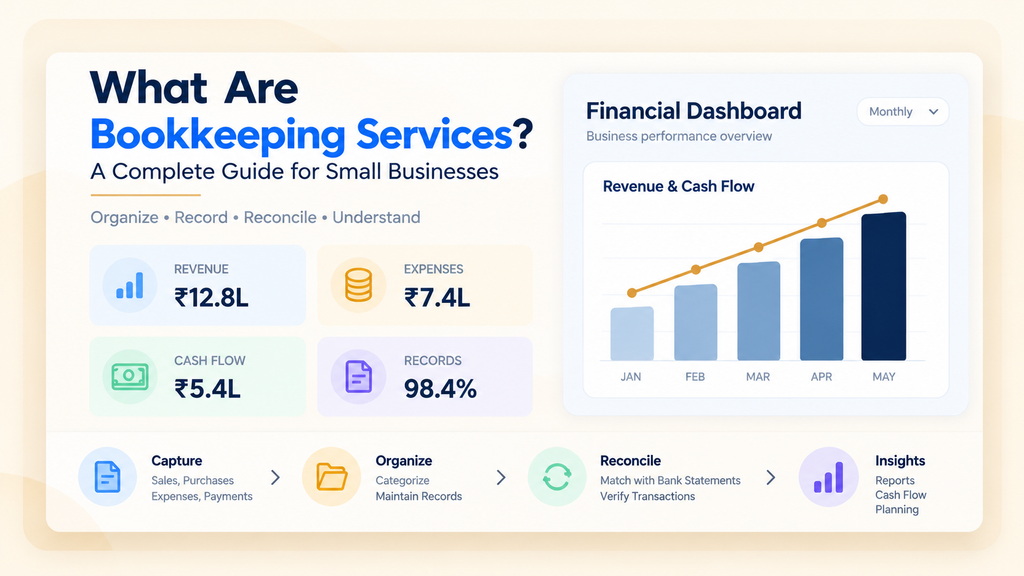
Managing the financial side of a business becomes more challenging as sales, purchases, payments and expenses increase. Every transaction creates information that needs to be recorded, organized and reviewed properly. For a growing business, maintaining accurate financial records can make it easier to understand income, expenses, cash movement and outstanding amounts.
A consistent financial process also gives business owners better information for reporting, tax preparation and planning. Understanding how transaction records are created and maintained is therefore an important part of running a business efficiently.
What Is Bookkeeping?
Bookkeeping is the systematic process of recording and organizing the financial transactions of a business. These transactions can include sales, purchases, receipts, invoices, payments, bank entries and other supporting documents.
The purpose is not simply to enter numbers into accounting software. A proper system creates an organized trail of financial activity that can later be reviewed through reports and reconciliations.
For a new business owner, understanding the bookkeeping meaning can help explain why regular transaction recording is important. When financial information is updated consistently, it becomes easier to identify missing entries, unusual transactions and amounts that are still outstanding.
Why Accurate Financial Records Matter
Accurate financial information helps business owners understand how money moves through their organization. It can show revenue generated, expenses incurred, amounts receivable from customers and payments due to suppliers.
For a small organization, bookkeeping services for small business can provide structured support when the owner does not have enough time to manage every transaction personally.
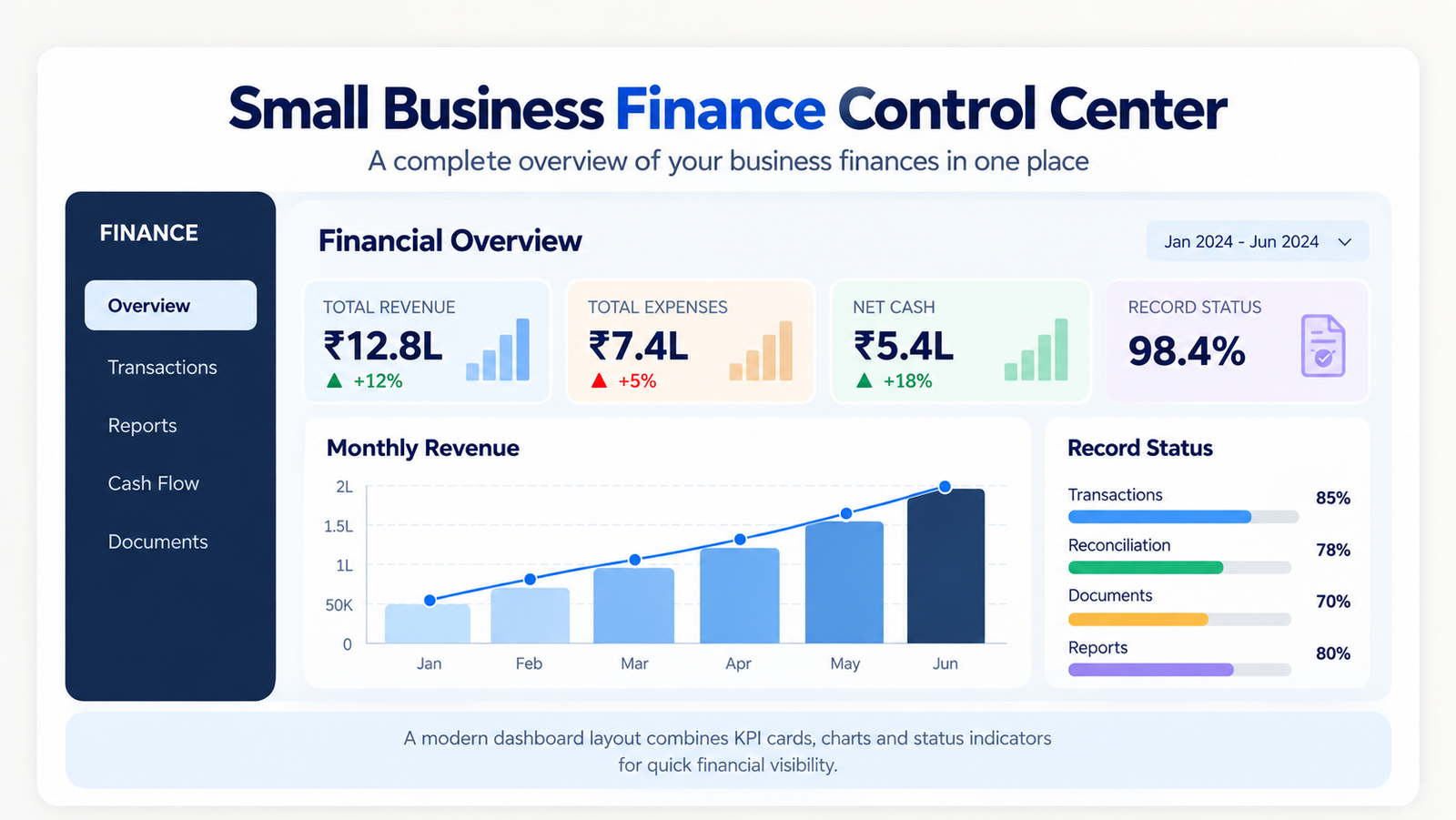
Good records can also make discussions with accountants and tax professionals easier because supporting documents and transaction details can be located when required.
For Indian businesses, tax-related information can be checked through the official Income Tax Department
Businesses dealing with GST can refer to the official GST Portal
for registration, return filing and other GST-related activities.
Key Activities Involved in Financial Record-keeping
A reliable financial workflow normally includes several important activities.
Recording Sales and Purchases
Sales invoices, purchase bills, receipts and payment details should be recorded systematically. Prompt recording reduces the possibility of missing transactions and makes later review easier.
Checking Bank Transactions
Bank entries should be compared with the records maintained by the business. Differences can occur because of bank charges, timing differences, duplicate entries or transactions that have not yet been recorded.
Regular checking helps identify these differences before they become difficult to investigate.
Managing Receivables and Payables
Customer balances show amounts expected to be collected, while supplier balances represent amounts that may need to be paid.
Keeping these figures organized helps business owners understand upcoming cash requirements.
Organizing Supporting Documents
Invoices, receipts, payment confirmations and other documents should be stored systematically. A clear document trail makes transaction verification easier when information is needed later.
Bookkeeping and Accounting: Understanding the Difference
People sometimes use bookkeeping and accounting as though they mean exactly the same thing. However, their functions can be different.
The accounting and bookkeeping difference can be understood through the level of financial work involved.
Bookkeeping primarily focuses on recording and organizing transactions. Accounting can involve reviewing those records, preparing financial statements, analyzing results and supporting business decisions.
Both activities can work together. Reliable transaction records provide the foundation for meaningful financial reporting and analysis.
Accounting Software for Small Businesses
Technology has changed the way businesses manage financial information. Many businesses now use digital platforms to record transactions, generate invoices and prepare reports.
Accounting and bookkeeping software for small business can help organize sales, expenses, invoices, customer balances and other financial information in one system.
The right software depends on transaction volume, business requirements, reporting needs and the level of automation required.
Software can reduce repetitive work, but it does not remove the need for review. Transactions should still be checked for accuracy and accounts should be reconciled regularly.
How Business Accounting Supports Decision-Making
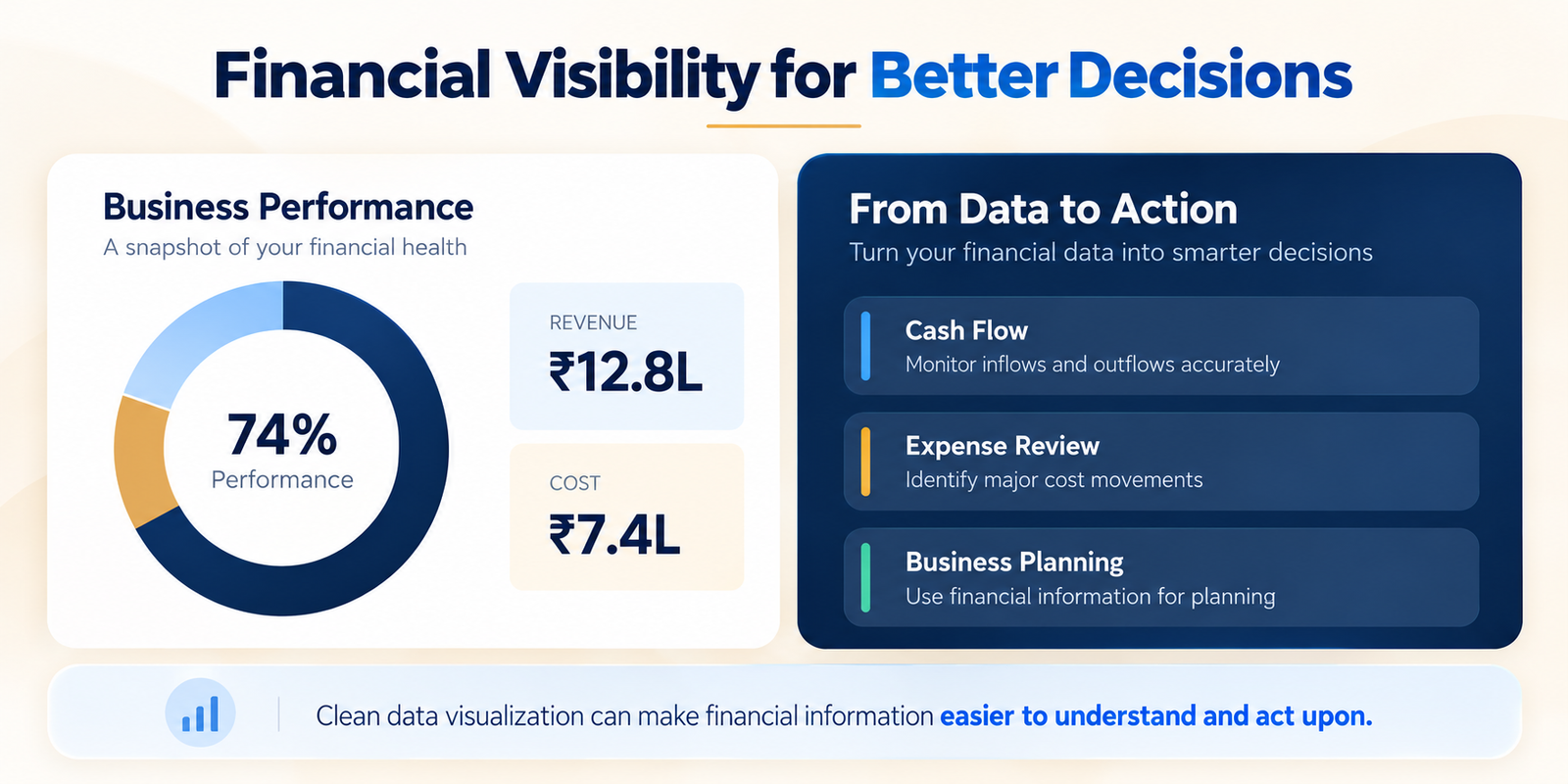
Financial records become more valuable when business owners use them to understand performance.
Business accounting can provide information about revenue, expenses, assets, liabilities and overall financial activity. This information can support decisions involving pricing, staffing, marketing, inventory and expansion.
For example, an owner may compare monthly revenue with operating expenses to understand whether costs are increasing faster than sales.
Reliable information can also help identify areas where unnecessary expenditure may need attention.
Digital and Online Financial Management
Businesses increasingly use cloud-based systems to manage financial information remotely.
Online accounting services can help businesses handle financial information through digital platforms, allowing authorized users to access relevant records without depending entirely on physical documents.
Digital workflows can also connect invoices, payment systems and bank information.
However, automation should always be combined with review. Imported transactions may contain errors, duplicate entries or incorrect classifications, so periodic checking remains important.
When Should a Business Consider Professional Support?
A business may consider professional assistance when transaction volume increases or when financial administration begins taking too much of the owner’s time.
Professional support can include transaction recording, reconciliation, document organization and preparation of financial information.
Businesses can also compare service options based on transaction volume, reporting requirements and the level of assistance required.
A business owner searching for accounting services for small business should first understand what the provider actually includes.
Important questions can include:
- Are bank accounts reconciled regularly?
- Are invoices and receipts organized?
- Are customer and supplier balances reviewed?
- Are monthly reports provided?
- How are supporting documents handled?
- How frequently is communication provided?
Understanding the scope of work can help avoid confusion later.
Common Mistakes Businesses Should Avoid
Several simple mistakes can reduce the usefulness of financial records.
- Delaying transaction entry for long periods
- Mixing personal and business transactions
- Ignoring bank differences
- Losing invoices or receipts
- Not monitoring customer balances
- Using inconsistent expense categories
- Assuming the bank balance represents profit
- Failing to review financial reports
A consistent routine can help reduce these problems.
How Often Should Financial Records Be Updated?
The appropriate frequency depends on the size and nature of the business.
A high-volume business may need transactions reviewed every day. A smaller business may use a weekly or monthly routine.
The important factor is consistency.
Waiting several months before updating records can create a large backlog. It can also make it harder to remember the reason behind individual transactions.
Regular updates allow errors to be identified while the relevant information is still available.
Small Business Bookkeeping: Key Benefits
Well-maintained financial records can provide several practical benefits.
First, they give the owner a clearer understanding of revenue and expenses.
Second, they make it easier to monitor amounts due from customers and payments owed to suppliers.
Third, organized records can support tax-related discussions and financial reporting.
Finally, reliable information can help owners make decisions based on actual business activity rather than assumptions.
Professional assistance can help business owners maintain organized financial records while they focus on daily operations and business growth.
Frequently Asked Questions
Can a small business maintain its own financial records?
Yes. A business with straightforward transactions may maintain its own records if the owner has sufficient time and knowledge.
Is bookkeeping the same as accounting?
No. Transaction recording and organization are generally associated with bookkeeping, while accounting can include broader reporting, analysis and interpretation.
Can financial records be maintained digitally?
Yes. Digital systems can be used to maintain financial information where they meet applicable requirements and provide appropriate access, security and record retention.
Does every business need professional assistance?
Not necessarily. The level of assistance depends on transaction volume, business complexity, available time and the owner’s knowledge.
Key Takeaways
Maintain Records Regularly
Financial transactions should be recorded consistently rather than being left until the end of a long period.
Keep Supporting Documents
Invoices, receipts and payment evidence should be organized so individual transactions can be verified when required.
Reconcile Accounts
Comparing recorded information with bank and other financial records can help identify differences.
Review Financial Information
Owners should regularly review revenue, expenses, outstanding balances and cash movement to understand business performance.
Conclusion
A structured financial record keeping system gives a business a reliable foundation for understanding its financial activity.
Recording transactions, organizing supporting documents, checking bank entries and reviewing financial information can make routine administration easier and provide useful information for future decisions.
As a business grows, its financial requirements may also become more complex. Establishing a consistent process early can therefore help reduce confusion and create a stronger foundation for financial reporting and planning.
For growing businesses, small business bookkeeping can provide a structured foundation for maintaining reliable financial information.