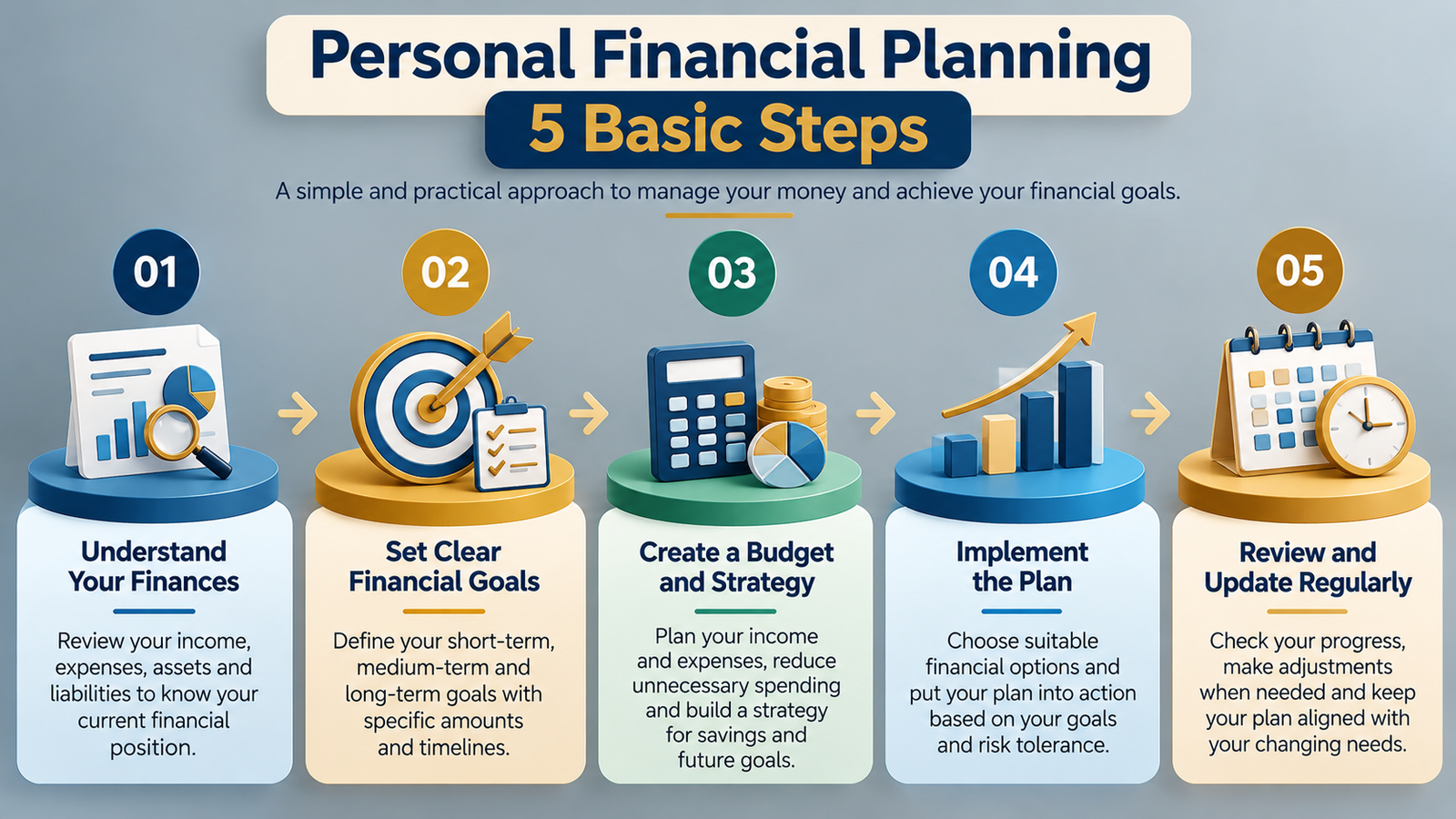
Managing money becomes easier when you know where your money is going, what you want to achieve, and how you plan to reach those goals. Personal financial planning provides a structured way to understand your current financial position, set realistic goals, organise your income and expenses, choose suitable financial strategies, and review your progress.
Many people think financial planning is only about investments. In reality, it covers much more than that. It can include budgeting, savings, debt management, insurance, emergency funds, investments, retirement planning and other long-term financial goals.
So, what are the 5 basic steps in personal financial planning? A practical approach is to understand your current position, define your goals, prepare a financial strategy, implement the plan, and review it regularly.
1. Understand Your Current Financial Position
The first step is to understand where you stand financially today.
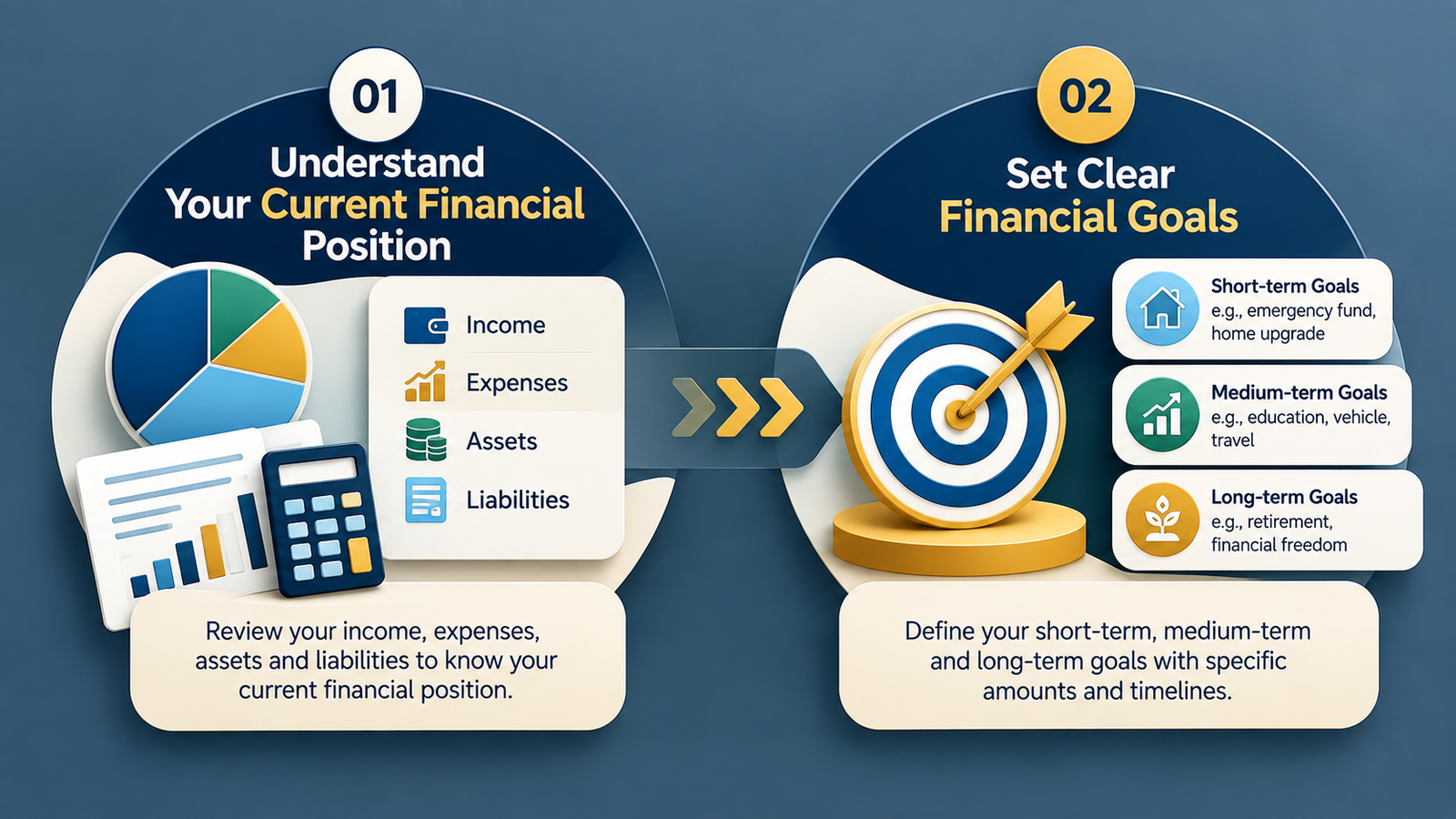
Start by listing your regular income and expenses. Include salary, business income, rental income or other regular sources of money. Then record major expenses such as household costs, education, insurance, loan payments, utilities, transportation and other recurring commitments.
You should also prepare a simple list of your assets and liabilities. Assets may include bank balances, investments, property and other financial resources. Liabilities can include home loans, personal loans, vehicle loans, credit card balances and other outstanding obligations.
Your net worth can be viewed as the difference between your total assets and total liabilities.
This step is important because it gives you a clear picture of your financial starting point. Without knowing your current position, it can be difficult to decide how much you should save, invest or allocate toward different goals.
SEBI Investor education material also places determining the current financial situation at the beginning of the financial planning process.
2. Set Clear and Measurable Financial Goals
Once you understand your current position, the next step is to identify what you want your money to achieve.
Your goals may be short-term, medium-term or long-term. For example, a short-term goal could be creating an emergency reserve. A medium-term goal might be saving for a vehicle or higher education. Long-term goals may include buying a house or preparing for retirement.
Instead of keeping a general goal such as “I want to save more money,” make the goal specific.
For example:
• Build an emergency fund of ₹2 lakh.
• Save ₹5 lakh for higher education.
• Create a fund for a future home purchase.
• Build a retirement corpus over the long term.
The amount, time period and priority of each goal should be considered. This helps you understand how much money may need to be allocated toward each objective.
SEBI’s financial education material also highlights identifying and setting financial goals as a key part of the planning process.
3. Prepare a Budget and Financial Strategy
After setting goals, you need a practical strategy for managing your income.
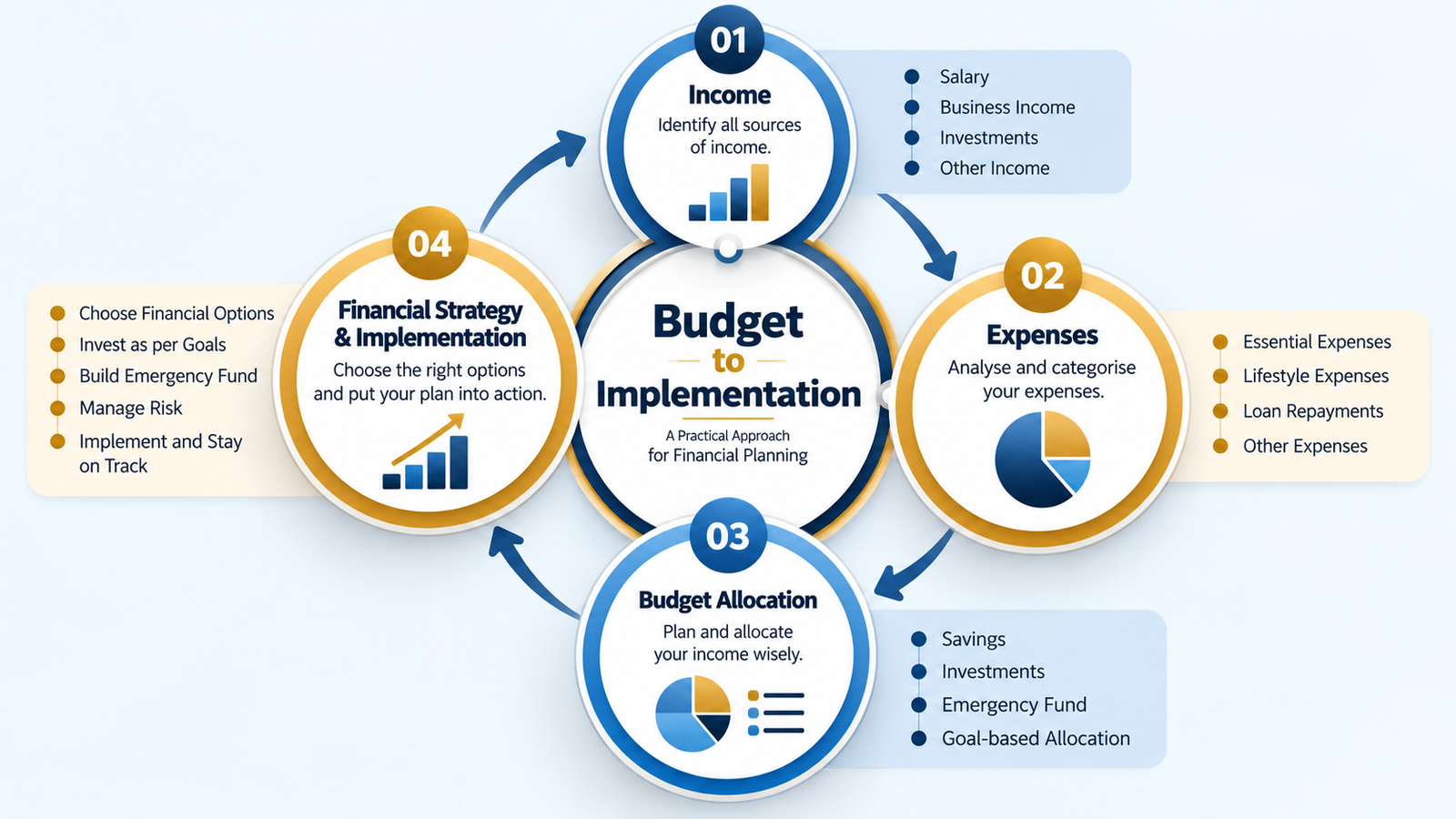
A budget helps you understand how much money comes in, how much goes out and how much can be allocated toward savings and future goals.
Start by separating essential expenses from discretionary spending. Essential expenses may include food, housing, utilities, education and necessary loan payments. Discretionary expenses may include entertainment, non-essential shopping and other optional spending.
A well-prepared budget can help identify areas where unnecessary spending can be reduced.
You should also consider an emergency fund. Unexpected events such as medical expenses, temporary loss of income or urgent household requirements can create financial pressure. Maintaining a separate reserve can help manage such situations.
Your strategy should also consider debt. High-cost debt can affect the amount available for savings and investments, so repayment priorities should form part of the overall plan.
SEBI Investor guidance recommends budgeting, tracking spending, prioritising expenses, building an emergency fund and investing for future goals as important aspects of managing income and expenses.
4. Choose Suitable Financial Options and Implement the Plan
After understanding your position, setting goals and preparing a budget, the next step is implementation.
Different financial goals may require different approaches. The time available, liquidity requirements, risk tolerance and purpose of the money should be considered before selecting any financial product.
For example, money required for a near-term goal may need a different approach from money intended for a long-term retirement objective.
Investment decisions should therefore be connected to specific financial goals rather than being made only because a particular product is popular.
Depending on your situation, your overall plan may include savings, insurance, debt repayment and suitable investment options.
This is where professional financial planning services can be useful. A structured review can help organise financial information, identify priorities and create a plan that matches the person’s objectives.
If investment-related advice is required, it is also important to understand the role and regulatory status of the person or entity providing the advice. Investors should verify relevant registrations and avoid making decisions solely on social media tips or promises of guaranteed returns.
SEBI Investor resources emphasise understanding risk, financial goals and investment horizons before making investment decisions.
5. Review and Update Your Financial Plan
Financial planning is not a one-time activity.
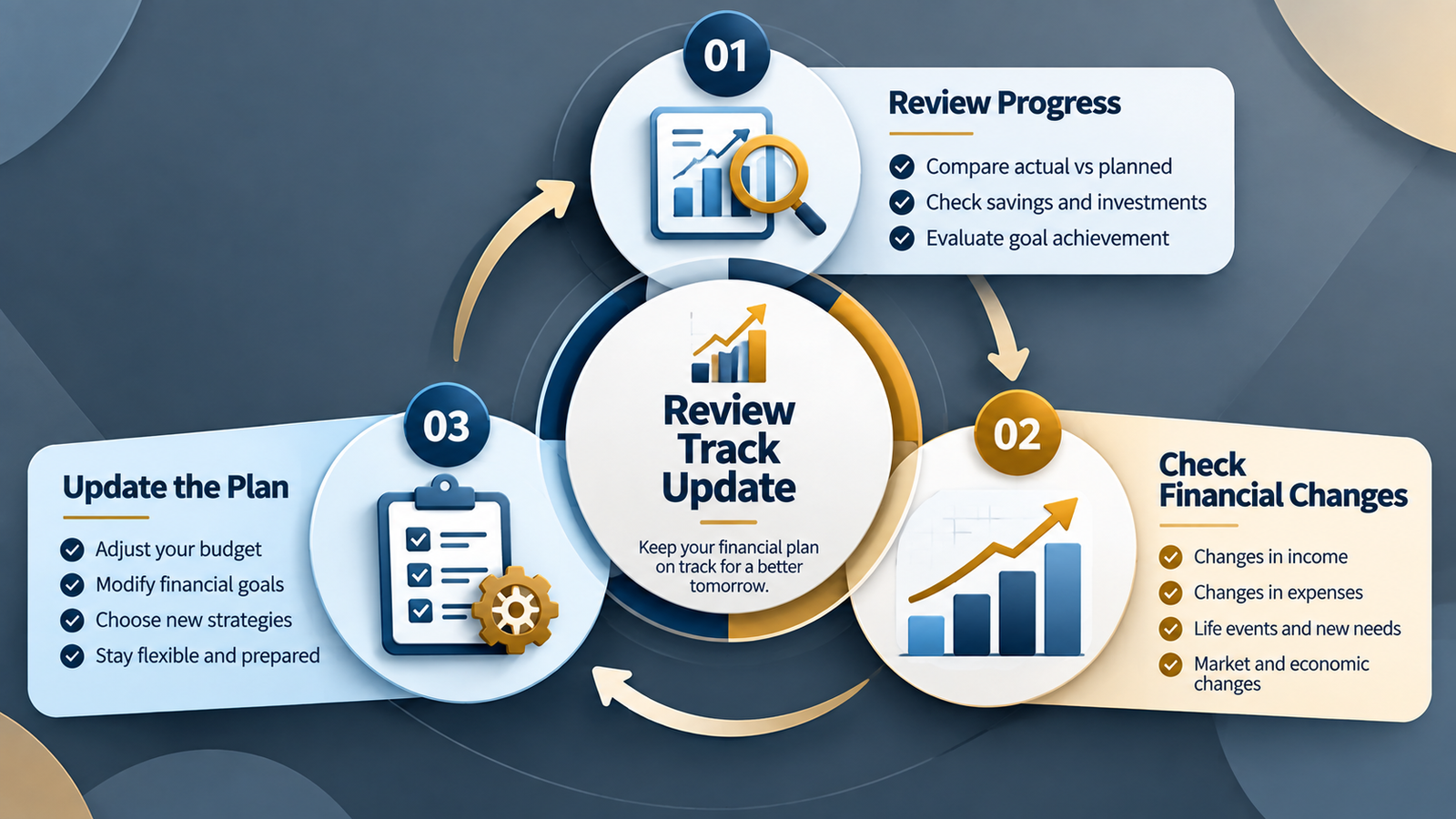
Your income, expenses, family responsibilities, loans, investments and financial goals can change over time. Because of this, the plan should be reviewed periodically.
For example, a change in employment may affect income. A new loan may change monthly commitments. Marriage, children, education expenses or a home purchase can create new financial priorities. Retirement plans may also need adjustment as circumstances change.
During a review, check whether you are progressing toward your goals, whether your savings rate is still appropriate, whether debt has changed, and whether your financial strategy still matches your current situation.
You should also review your emergency fund and insurance requirements when your circumstances change.
SEBI’s financial planning framework includes reviewing and revising the financial plan, making this an important continuing step rather than an activity that ends after the initial plan is prepared.
Why Is Personal Financial Planning Important?
A structured approach can make financial decisions easier to organise.
It can help you:
• Understand your current financial position.
• Set clear financial goals.
• Control income and expenses.
• Plan savings systematically.
• Manage debt more effectively.
• Prepare for unexpected expenses.
• Organise long-term financial objectives.
• Review progress toward important goals.
The purpose is not simply to accumulate money. It is to organise financial resources around meaningful personal and family objectives.
Common Financial Planning Mistakes to Avoid
Even a basic plan can become ineffective if important areas are ignored.
One common mistake is not tracking expenses. Without knowing where money is being spent, it can be difficult to identify unnecessary outflows.
Another mistake is setting goals without considering the time required to achieve them. Goals should be realistic and connected to available resources.
Ignoring emergency requirements can also create financial pressure when unexpected expenses arise.
Some people also make investment decisions without considering their financial goals, time horizon or risk tolerance. Financial products should be evaluated carefully instead of being selected only because they are trending or recommended by someone online.
Finally, failing to review the plan can make an old strategy unsuitable when income, expenses or responsibilities change.
When Should You Consider Professional Financial Planning Support?
If your financial situation involves multiple goals, different sources of income, significant liabilities, investments or long-term planning requirements, professional support may help organise the information.
A financial consultant can assist with reviewing financial information, identifying priorities, preparing a structured plan and monitoring progress.
However, the exact services required depend on the individual’s circumstances. Investment-related decisions should be made only after understanding the relevant risks, costs and regulatory requirements.
For businesses and individuals looking for structured guidance, you can also explore our Financial Advisory Services to understand the type of support available.
Frequently Asked Questions
What is personal financial planning?
Personal financial planning is the process of organising income, expenses, savings, liabilities, investments and financial goals into a structured plan. It helps individuals make financial decisions according to their current position and future objectives.
What are the 5 basic steps in personal financial planning?
The five practical steps are understanding your current financial position, setting clear goals, preparing a budget and strategy, implementing suitable financial actions, and reviewing the plan regularly.
Why is budgeting important in financial planning?
Budgeting helps track income and expenses and shows how much money may be available for savings, debt repayment and future financial goals.
Should financial plans be reviewed regularly?
Yes. A financial plan should be reviewed when there are significant changes in income, expenses, family responsibilities, debt, investments or financial goals.
Can professional financial planning services help?
Professional support can help organise financial information, identify priorities and structure a plan. The appropriate service depends on the person’s financial circumstances and requirements.
Final Thoughts
Personal financial planning does not have to be complicated. The process can start with a clear understanding of your current financial position and then move toward specific goals, budgeting, implementation and regular review.
The most important part is consistency. A financial plan should evolve as your circumstances change.
If you are unsure where to start, reviewing your income, expenses, assets, liabilities and financial goals is a practical first step. From there, you can gradually build a structured approach to savings, debt management, protection and long-term financial objectives.