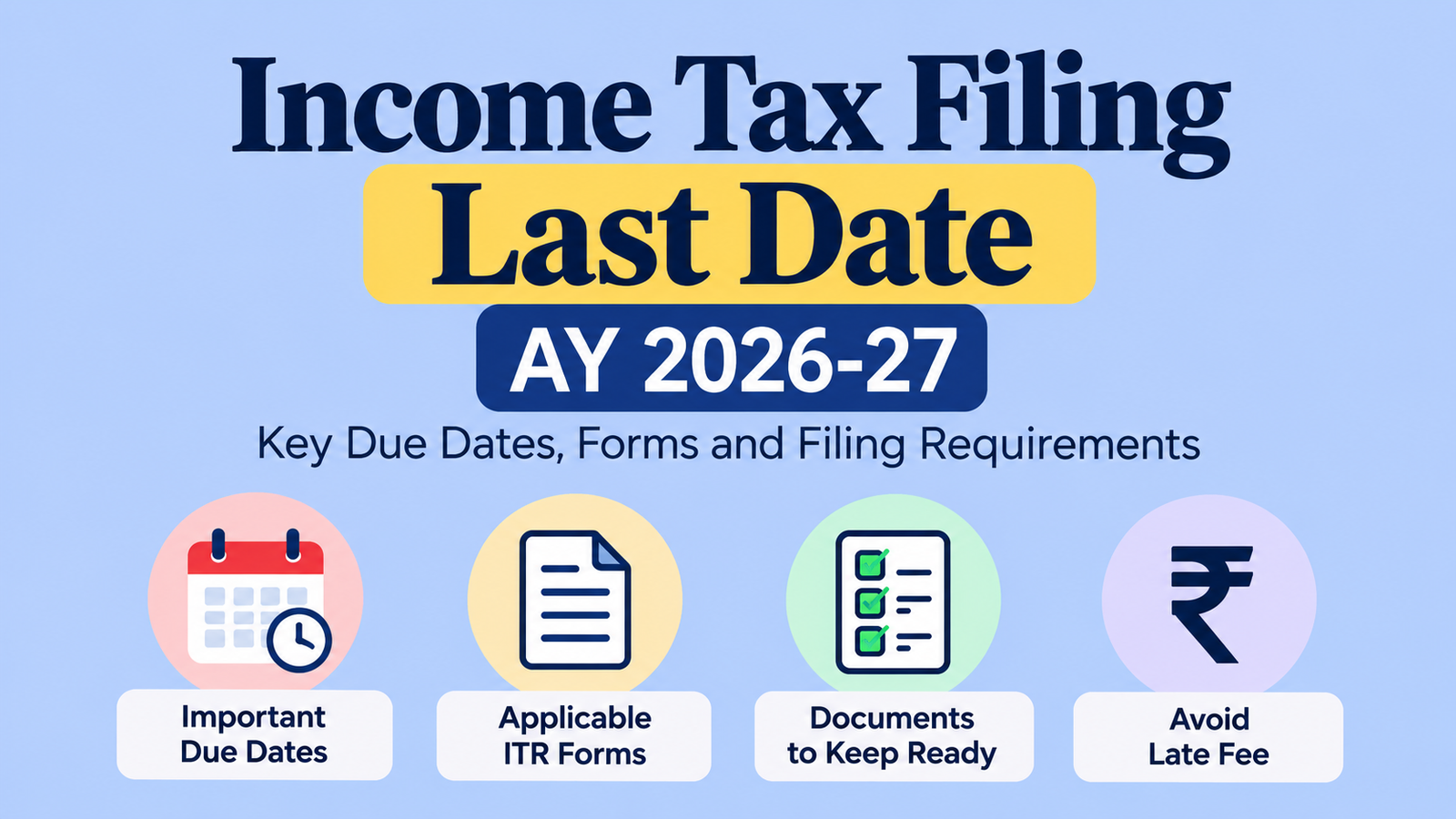
For taxpayers planning their return filing, knowing the income tax filing last date is important because the applicable deadline depends on the type of taxpayer and the compliance requirements that apply to them. For AY 2026-27, the Income Tax Department has also issued a recent extension for certain audit-related cases. Therefore, taxpayers should check the deadline applicable to their category rather than relying on a single date.
What Is the Income Tax Filing Last Date for AY 2026-27?
The due date for filing an income-tax return is not identical for every taxpayer. The applicable deadline can depend on the taxpayer category, type of income, ITR form and whether tax audit provisions apply.
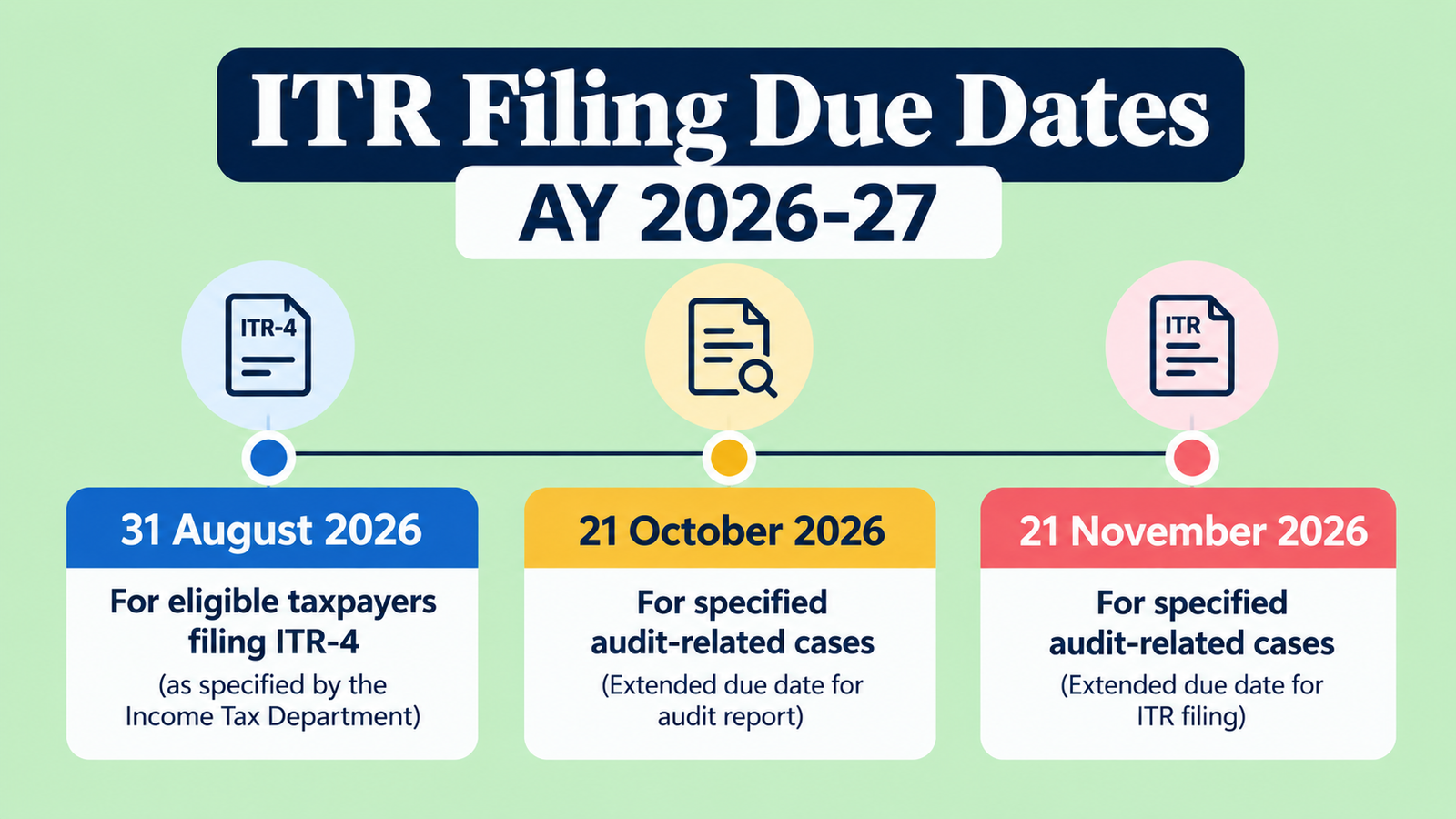
For AY 2026-27, the Income Tax Department states that the due date for filing ITR-4 for eligible taxpayers is 31 August 2026. However, this date should not automatically be applied to every taxpayer or every ITR form.
For specified audit-related cases, the Income Tax Department has recently extended the return filing deadline from 31 October 2026 to 21 November 2026.
Therefore, checking the applicable itr filing last date before preparing the return is an important part of tax compliance.
Important ITR Filing Dates to Check
Regular Taxpayers
For eligible taxpayers filing ITR-4 for AY 2026-27, the Income Tax Department has specified 31 August 2026 as the filing due date.
However, taxpayers should first identify the ITR form applicable to their income and circumstances. Individuals with salary income, business income, capital gains, professional income or other sources of income may have different filing requirements.
The correct deadline should therefore be confirmed based on the applicable return category.
Taxpayers Covered by Audit Provisions
For specified audit-related cases, the Income Tax Department announced on 29 September 2026 that the due date for filing returns for AY 2026-27 has been extended from 31 October 2026 to 21 November 2026.
The corresponding audit-report due date has also been extended from 30 September 2026 to 21 October 2026.
This update is particularly relevant for businesses and professionals whose income-tax returns are connected with an audit requirement.
Why Checking the Correct Deadline Matters
Missing the applicable deadline can result in additional compliance requirements. Depending on the circumstances, a return filed after the original due date may attract a late filing fee and interest on outstanding tax liability.
The Income Tax Department states that taxpayers can still file a return after the original due date, subject to applicable provisions. A late filing fee and interest may apply depending on the taxpayer’s circumstances and tax liability.
The filing deadline can also be important when taxpayers need to claim or carry forward eligible losses or complete other tax-related compliance within the permitted time.
For this reason, taxpayers should confirm the applicable deadline before beginning income tax filing online.
How to Check Your Applicable ITR Due Date
Before starting the filing process, taxpayers can follow these simple steps:
- Identify the financial year and assessment year.
- Determine your taxpayer category.
- Identify the ITR form applicable to your income.
- Check whether your case is subject to tax audit or another special compliance requirement.
- Confirm the latest due date from the official Income Tax Department.
- Keep your income, deduction, TDS and tax-payment information ready.
- Submit the return and complete the applicable verification process.
The official Income Tax e-Filing Portal provides the current filing facilities, return-related services and department updates. :contentReference[oaicite:0]{index=0}
Documents to Keep Ready Before Filing
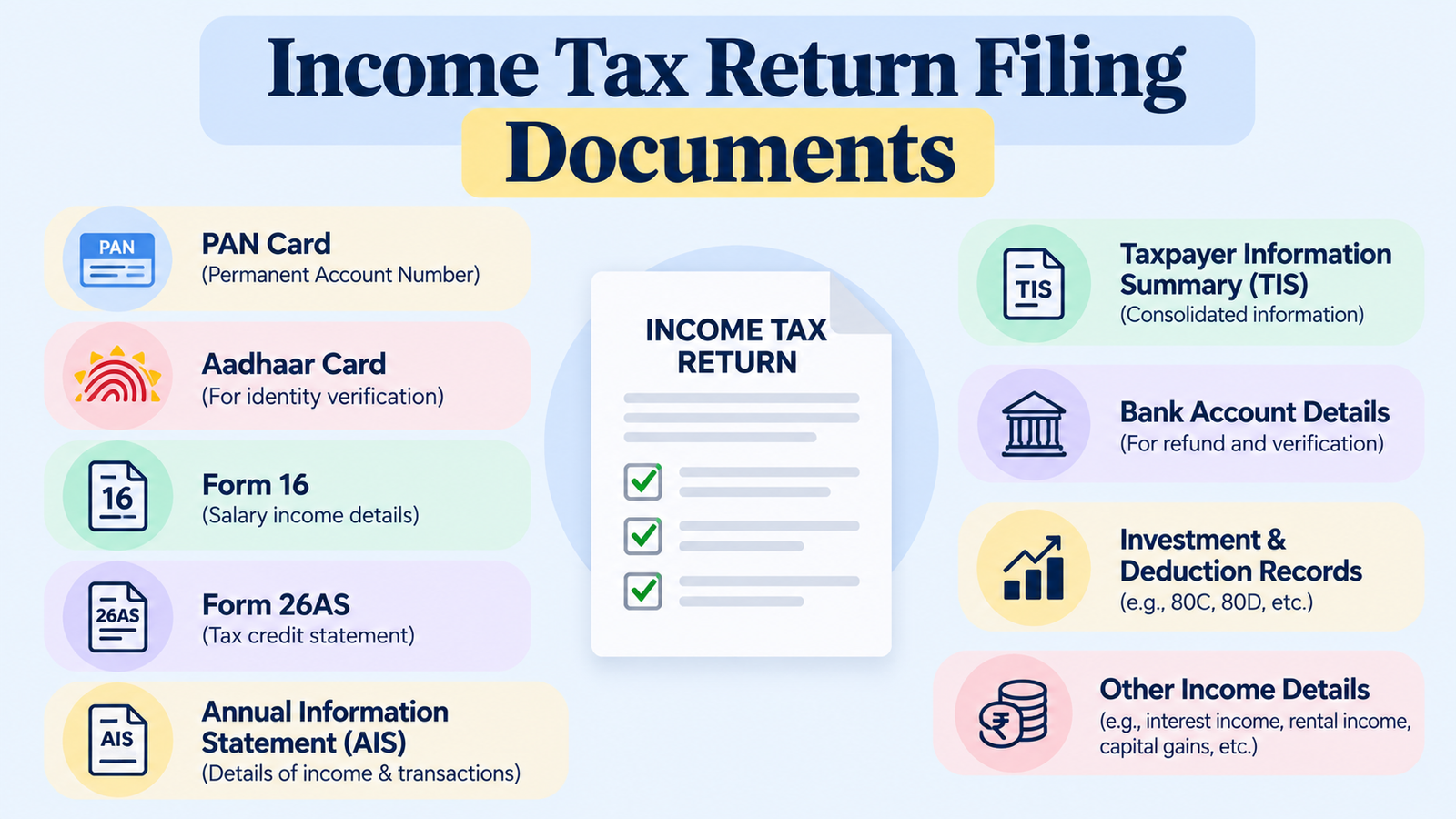
Keeping the required information ready can make the income tax return filing process more organised. Depending on the taxpayer and applicable ITR form, commonly required records may include:
- PAN and Aadhaar details
- Salary or pension information
- Form 16, where applicable
- Bank interest and other income details
- TDS information and tax-credit records
- Capital-gain statements, where applicable
- Details of eligible deductions and investments
- Business or professional income records
- Advance tax and self-assessment tax payment details
- Bank-account information required for the return
Taxpayers should reconcile their income and supporting records with the available tax statements before submitting the return.
For taxpayers who need assistance with TDS-related compliance, you can also explore our TDS services for related support.
What If You Miss the Due Date?
If the applicable due date has passed, taxpayers should not assume that filing is no longer possible.
A return may still be filed after the original due date, subject to the applicable provisions. Late filing fees and interest may apply depending on the taxpayer’s circumstances and outstanding tax liability.
Before filing a delayed return, taxpayers should check whether any additional consequences apply to their particular situation.
If you have business income, audit requirements, carried-forward losses, foreign income or other complex tax matters, it is useful to review the applicable requirements before submitting the return.
Common Mistakes to Avoid
Using the Wrong Deadline
One of the common mistakes is assuming that every taxpayer has the same filing deadline. The applicable date can depend on the taxpayer category, ITR form and audit requirements.
Always check the latest official information before filing.
Ignoring TDS Mismatches
Taxpayers should compare their TDS information with the available tax records before submitting the return.
If there is a mismatch, investigate the difference and verify the correct figures instead of filing the return with unverified information.
Filing the Return but Not Completing Verification
Submitting a return is not necessarily the final step. Taxpayers should complete the applicable verification process and retain the acknowledgement for their records.
Waiting Until the Final Day
Waiting until the last day can increase the possibility of errors, missing information or technical difficulties.
Preparing documents early gives taxpayers sufficient time to review the return before submission.
Frequently Asked Questions
What is the income tax filing last date for AY 2026-27?
There is no single deadline applicable to every taxpayer. The due date depends on the taxpayer category, ITR form and applicable compliance requirements.
For example, the Income Tax Department specifies 31 August 2026 as the due date for eligible ITR-4 taxpayers. For specified audit-related cases, the return filing deadline has been extended to 21 November 2026.
What is the ITR filing last date for audit cases in AY 2026-27?
For the specified audit-related cases covered by the latest extension, the return filing deadline has been extended from 31 October 2026 to 21 November 2026.
The corresponding audit-report deadline has been extended from 30 September 2026 to 21 October 2026.
Can I file my return after the due date?
Yes. A return may still be filed after the original due date, subject to the applicable provisions.
Late filing fees and interest may apply depending on the taxpayer’s circumstances and outstanding tax liability.
Where can I file my income tax return?
Taxpayers can submit their return through the official Income Tax Department e-Filing Portal.
Before starting itr filing online, taxpayers should verify the relevant assessment year, applicable ITR form and current filing requirements.
Final Income Tax Filing Checklist
Before submitting your return, check the following:
- Correct assessment year selected
- Correct ITR form selected
- Income details reconciled
- TDS and tax-credit details checked
- Deductions and exemptions reviewed
- Tax payable or refund position checked
- Bank details verified
- Return submitted successfully
- Verification completed
- Acknowledgement saved
- Supporting documents retained
Conclusion
The income tax filing last date should always be checked according to the taxpayer category and applicable compliance requirements.
For AY 2026-27, the Income Tax Department has issued a recent extension for specified audit-related cases. The return filing deadline for those specified cases has been extended from 31 October 2026 to 21 November 2026, while the related audit-report deadline has been extended from 30 September 2026 to 21 October 2026.
Preparing records early, checking tax-credit information and confirming the applicable due date can help make the filing process more organised and reduce avoidable compliance issues.
Taxpayers should always refer to the latest official Income Tax Department information before submitting their return.